
From Zero to $10K a Month: How We Filled the Austin Academy
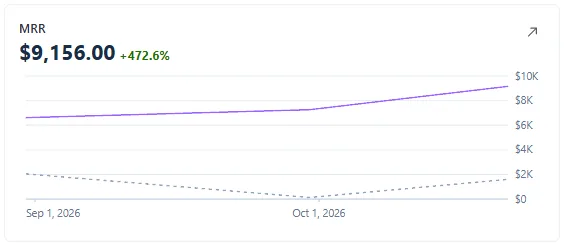
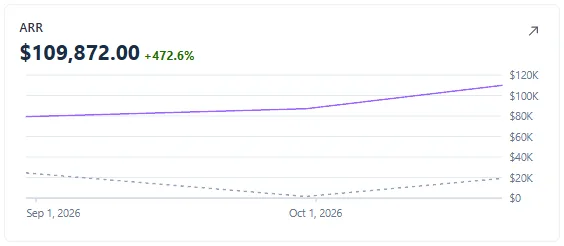
In late October 2026, our partner academy in Austin, Texas had almost $10K a month in recurring revenue, an annual run rate of $110K. On July 1 it had one paid membership.
Our first Austin story, Inside a 45-Day Youth Soccer Academy Launch, followed our partner from the idea to the first paid membership. This one covers the summer campaign that filled the groups. The partner who runs the academy agreed to publish every number here.
| Austin academy | Figure |
|---|---|
| MRR, monthly recurring revenue, late October | $9,156 |
| ARR, annual run rate, late October | $109,872 |
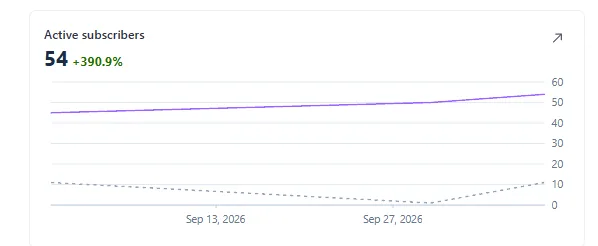
| Active paid memberships in early October, sold in about two months | 54 |
| Cost per lead, ads July 20 to October 4 | $11.14 |
| Ad spend per membership sold | about $50 |
These are our partner’s results, and they do not predict what another academy will earn. The figures show revenue; what an academy spends on venues and coaches is on the investment page.
The Result
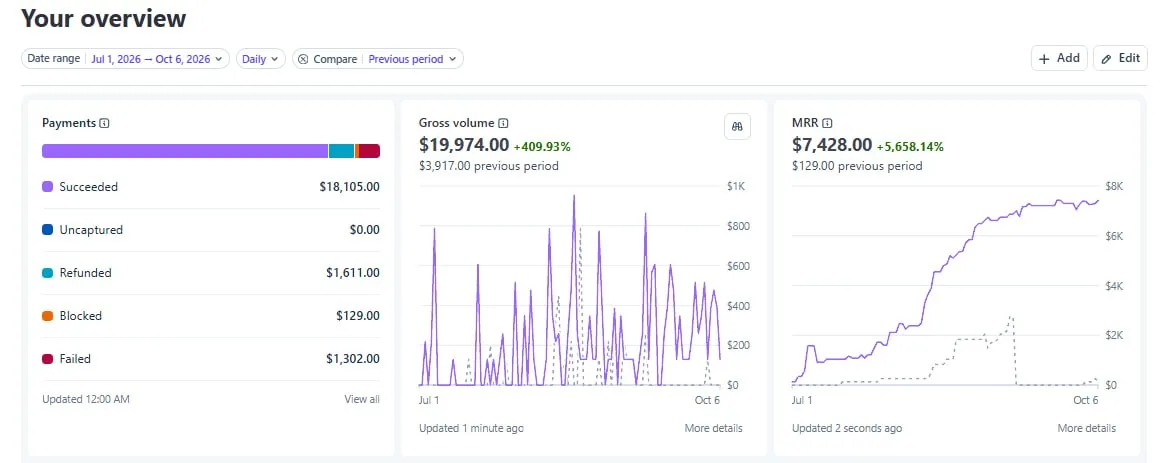
Between July 1 and early October the academy sold 66 memberships, and about nine in ten of them had not been canceled. Most of the 66 came in August, 39 in one month, when back-to-school arrived and the campaign was already tuned. Gross payments over that period came to about $20,000 before refunds. A membership is $129 a month for one class a week or $219 for two.
What It Cost
The campaign ran from July 20 to October 4 and cost $3,098 in ad spend. It brought 278 leads at $11.14 each, and about 100 children came to a free trial class. By October 6, when the campaign report closed, 62 memberships had been sold since July 1, and Stripe counted 66 a few days later. In each of the three reporting periods, the average cost per lead stayed under our $15 benchmark, between $10.51 and $13.50. Single weeks went higher, as the weekly chart in Decision 3 shows.
So a membership cost about $50 to win in ad spend. The first monthly payment averaged $146 in early October, almost three times that. Stripe’s estimate of a family’s lifetime value was $1,290 in late October, about 26 times as much. The $50 is ad spend only; our team’s hours and the partner’s time come on top.
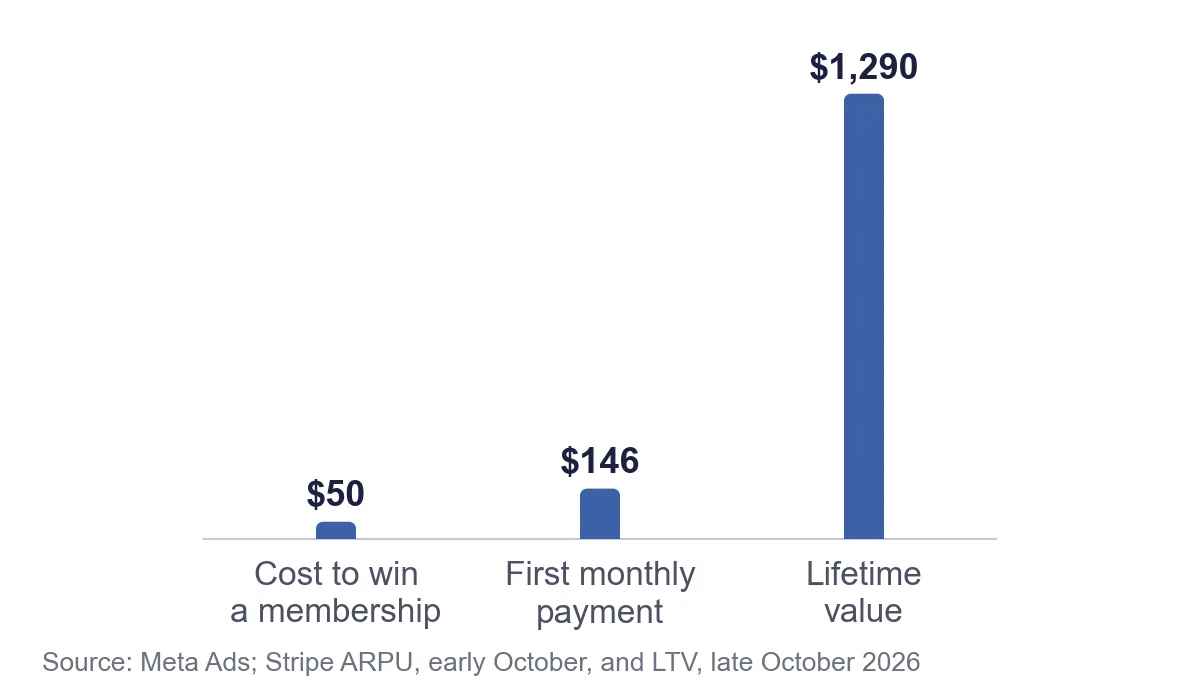
Ad spend, leads and conversations come from Meta, memberships and revenue from Stripe. The figure of about 100 trial classes is the academy’s own estimate, and the lifetime value is Stripe’s model on a young account that will move as the first families reach a full year.
How We Did It: Six Decisions
Ads resumed on July 20, during the slowest weeks of the year for kids’ activities, and the system was tuned by mid-August, in time for back-to-school. The campaign came down to six decisions:
- Offer and audience: a free trial class for ages 4 to 8, with ads shown within 10 miles of Pflugerville.
- Destination: where the button leads. We built five paths and tested them against each other.
- Creative: a new batch every week and a half to two weeks, before the old one wears out.
- Copy and the first message: the text repeats the frame, and the parent’s first message is already written.
- Platform and Data Room: one person ran the conversations, while the platform sent the reminders and follow-ups.
- Analytics to payment: purchases go back to Meta, so every ad is judged by the memberships it produced.
Decision 1: Offer and Audience
We narrowed the offer to one free class for children aged 4 to 8 in Pflugerville.
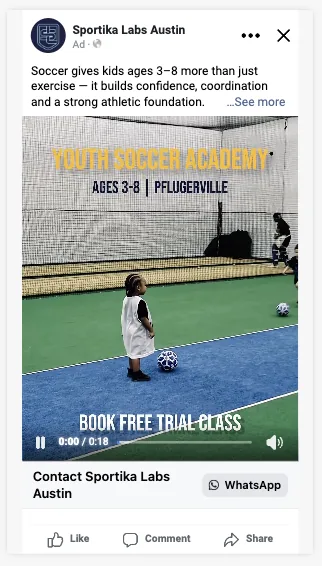
At launch the ads spoke to parents of children aged 3 to 16 across three areas, with a list of the academy’s strengths. By October the ad said: ages 4 to 8, Pflugerville, “Free trial. No soccer experience required.”


We tested demand at both venues, and Pflugerville responded better than Round Rock. Ages 4 to 8 booked and paid best. In the academy’s CRM, nine in ten leads with an age on record were children between 3 and 8. The schedule still runs groups from age 3 to 10.
Over the whole WhatsApp campaign we also tested four audiences: parents of kids aged 3 to 8 at $9.97 per conversation, parents who are soccer fans at $10.36, a broad audience with no interests at $13.04, and soccer fans without the parent filter at $18.07, from only 20 conversations. We would run this test early in any new city.
The campaign setup in Austin:
- one campaign with two or three ad sets (an ad set is a group of ads with one audience and one budget), three or four creatives in each, and the same settings everywhere, so the creatives compete on equal terms;
- a 10-mile radius around Pflugerville, because parents rarely drive farther for a weekly class;
- adults 25 to 55, English, with Meta’s automated audience expansion on;
- a daily budget of $15 to $50, set by how many new conversations the academy could handle that week.
Decision 2: Where the Button Leads
An ad can send a parent to a form, a chat, a booking page or a payment page, and Meta can optimize a campaign for each of those actions. We built five such paths, each optimized for its own action, and compared them by the cost of getting a child to a class.
| Where the ad led | Optimized for | What we saw |
|---|---|---|
| Meta lead form | Lead | The cheapest lead, but someone at the academy has to start every conversation. |
| Message sent | 254 conversations at $11.32 since July. The parent writes first and shows up for the trial most often. | |
| Website: buy a membership | Purchase | No results. Parents here wanted to see a class before paying. |
| Website: book a trial (August) | Trial booking | 24 bookings at $9.25. Parents read about the academy in more detail on the website and came to the trial better informed. |
| A scheduling page | Confirmed booking | Parents picked a slot themselves, and each confirmed booking was reported back to Meta. |
We also tried two hybrids: a lead form whose thank-you screen links to a trial time picker, and a lead form whose thank-you screen opens WhatsApp with a message already typed. Both hybrids, like the plain WhatsApp path, need no development. Booking on the website needed a page of its own, and Meta receives the result of every path, from a sent message to a payment.
We track three costs for each path, because the cheapest lead is not always the cheapest membership. Here a lead, meaning a parent who sent the first message, cost about $11. The next step, a child who came to a class, cost about $30, an estimate based on about 100 trial classes since July. A membership cost about $50.
Parents in another market may prefer a different first step, so these paths should be tested again there.
Want to see how this campaign would run in your city?
Leave a request. Our AI agent maps the venues around you, and we’ll send you the list and our presentation, then walk you through an operational model for your city on the intro call.
Leave a requestDecision 3: New Creative Every Two Weeks
Creative wears out, so we replaced it on a schedule, with a new batch every week and a half to two weeks. Since the academy’s launch that has added up to six waves, with 22 banners and 5 videos run as 112 ads.
In a 10-mile radius the audience is small and gets covered fast. A good ad stops working once the people Meta keeps showing it to have seen it several times, even though the ad itself has not changed. We built each new batch on the results of the last one.






What changed from wave to wave:
- the picture: brand graphics, then generated images, then real photos and footage from the venue;
- the audience: from ages 3 to 16 in three areas to ages 4 to 8 in Pflugerville;
- the message: from a list of strengths to one big line;
- the format: square banners, then vertical banners, then 15-second reels.
Over the whole WhatsApp campaign, the two ads with the most conversations were “Get your kid off screen time”, with 149 from $6.54 each, less than half of our $15 benchmark, and a video from a real class, with 80 from $9.03. The launch banner, “Soccer for kids ages 3 to 16”, had cost $15 to $23 per conversation.

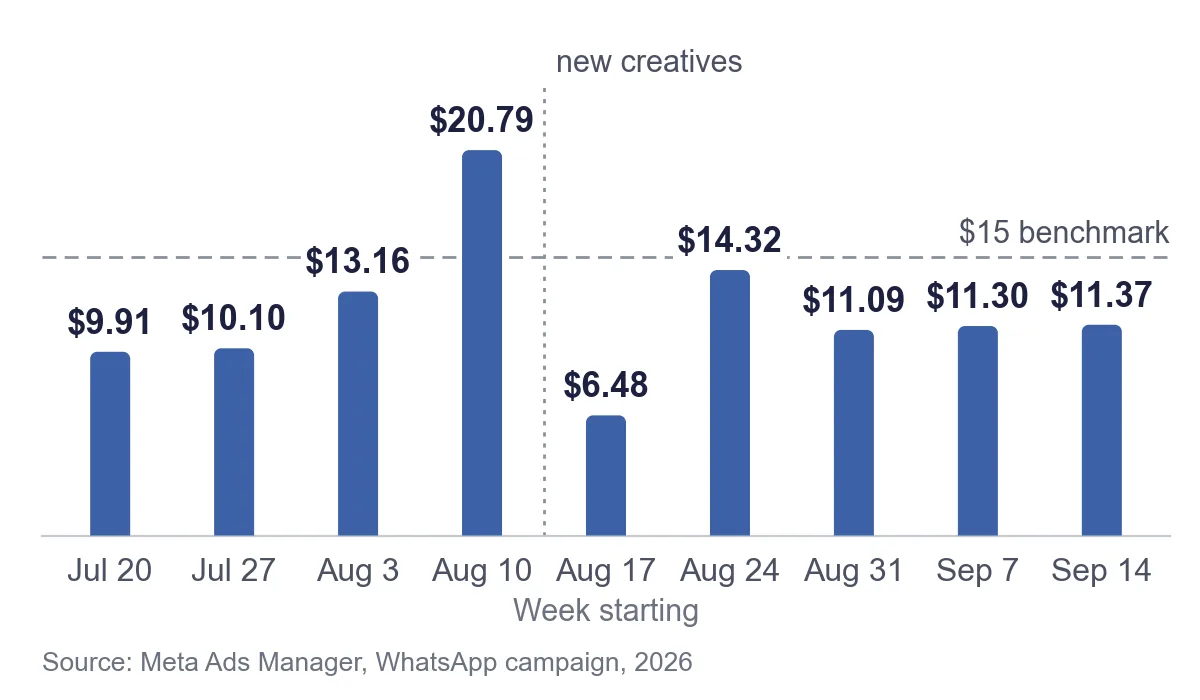
On the same ads, the weekly cost per lead rose from $9.91 to $20.79 in four weeks. New banners and videos went live on August 17, and the next week came in at $6.48. The October reel brought the cost per lead down from $13.50 to $7.15 in its first days. CPM, what Meta charges to show an ad a thousand times, stayed around $11 to $12 the whole time, so the rise came from people seeing the same pictures again.
Decision 4: The Copy and the First Message
We rewrote the copy under the ad and the first WhatsApp message a parent sends.
In September the ad copy opened with “Does your child seem to have a natural feel for sports?” and hid the offer in the last line, under “See more”. Copy about a “development-focused environment” started a period whose most expensive week cost $15.96 per lead. The October copy opened with “Pflugerville parents: FREE soccer trial for kids ages 4-8.”

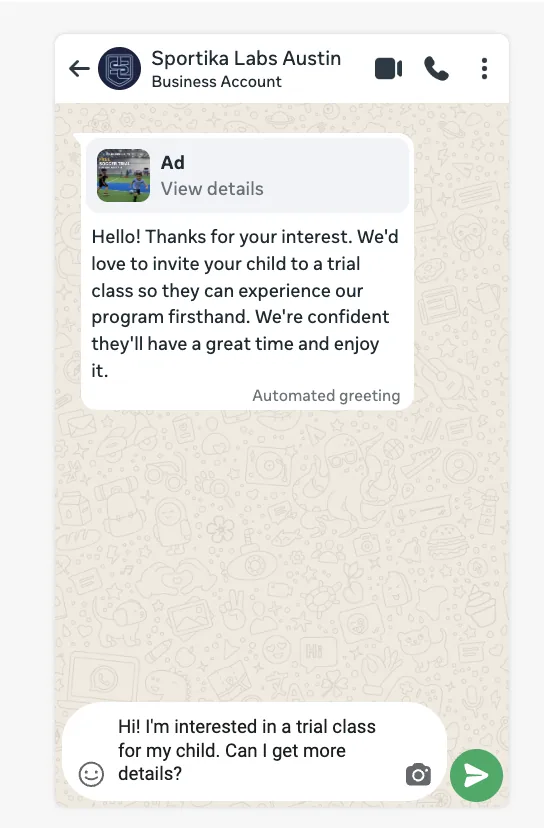
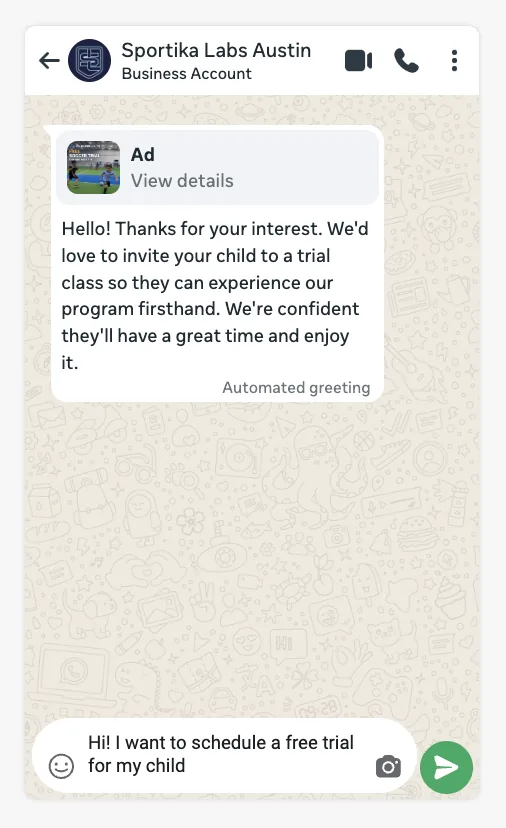
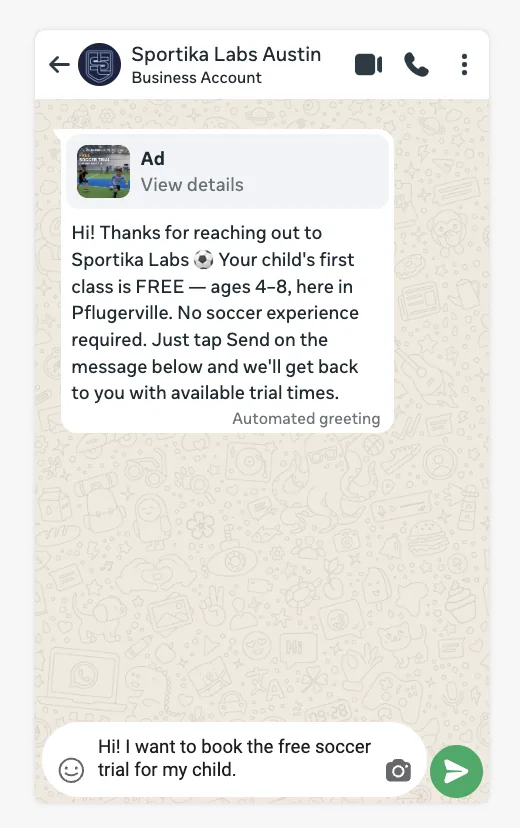
The current greeting reads: “Hi! Thanks for reaching out to Sportika Labs. Your child’s first class is FREE, ages 4 to 8, here in Pflugerville. No soccer experience required. Just tap Send on the message below and we’ll get back to you with available trial times.” Under it, already typed: “Hi! I want to book the free soccer trial for my child.” From there the partner took over the conversation.
Decision 5: The Platform and the Data Room
We kept one person on the conversations and handed the routine to the platform. This summer the partner handled more than 200 WhatsApp conversations personally, with replies built on scripts from the Data Room.
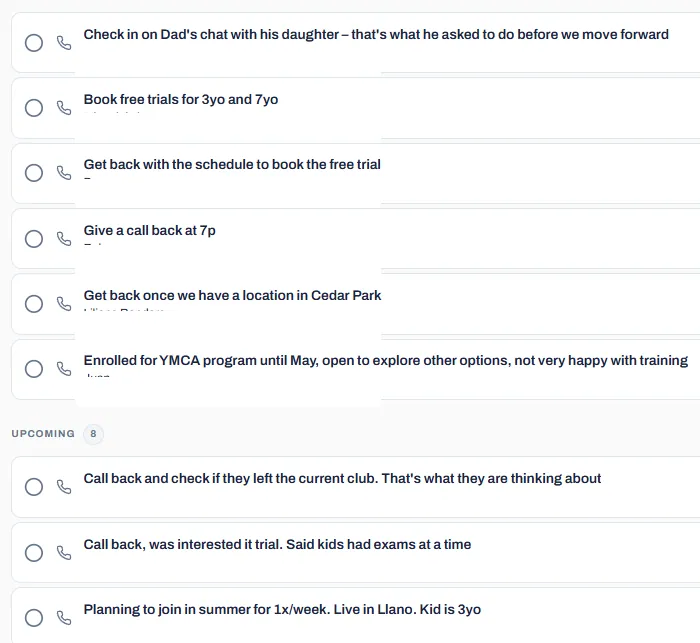
Website forms land in the CRM inside the Sportika Labs platform on their own, and WhatsApp conversations are added by hand. Each family has a card with its status, the child’s age, the trial slots at the chosen venue and the history of every touch. After each conversation the partner moves the card from stage to stage, from New Contact to Subscribed, and the platform turns the cards into a task list for the day.
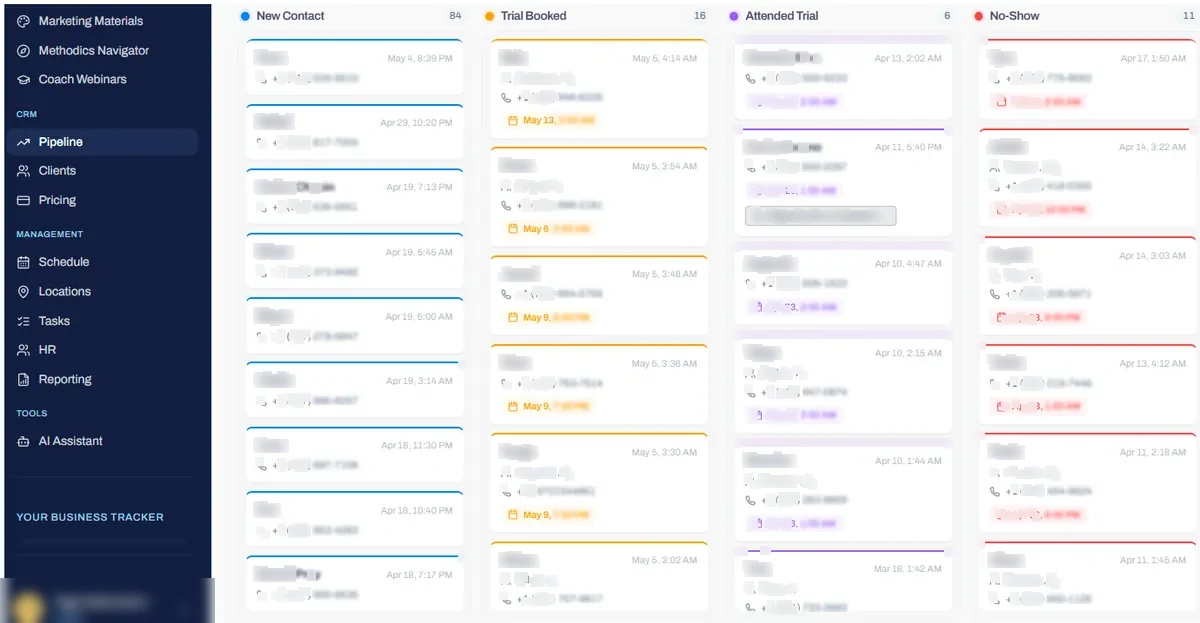
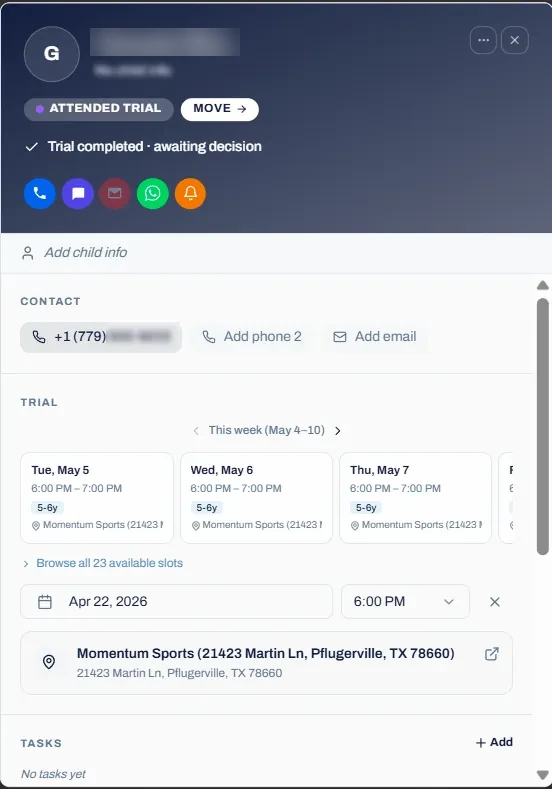
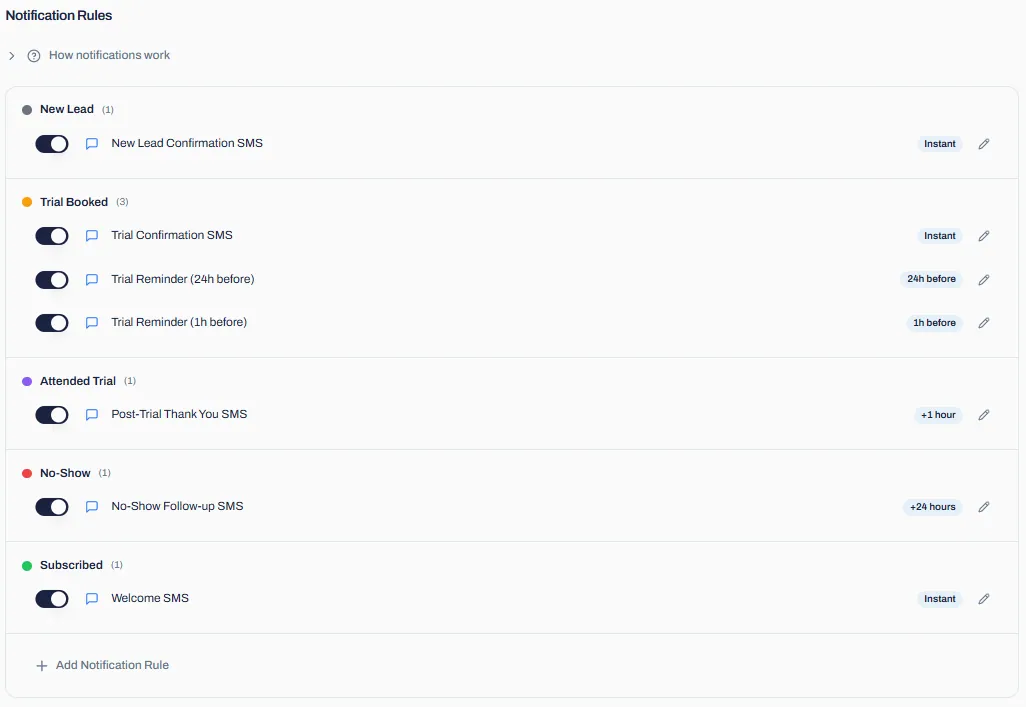
The texts go out by themselves: a confirmation when the request lands, reminders 24 hours and 1 hour before the trial, a thank-you after the class, a follow-up after a no-show and a welcome text the moment a family pays.
The Data Room is the library of files every partner gets with the platform. This summer the Austin academy worked from three sets of files:
- the WhatsApp reply scripts: the answer to a first message, the time options, what to bring and the reminder before the trial;
- the call scripts and the objection guide for parents who hesitate;
- the guide to acquiring your first customers, with its starter checklist.
The Launch Roadmap inside the platform links each task to the file it needs. A partner who hires a manager can run the same setup, as long as someone answers the same day.
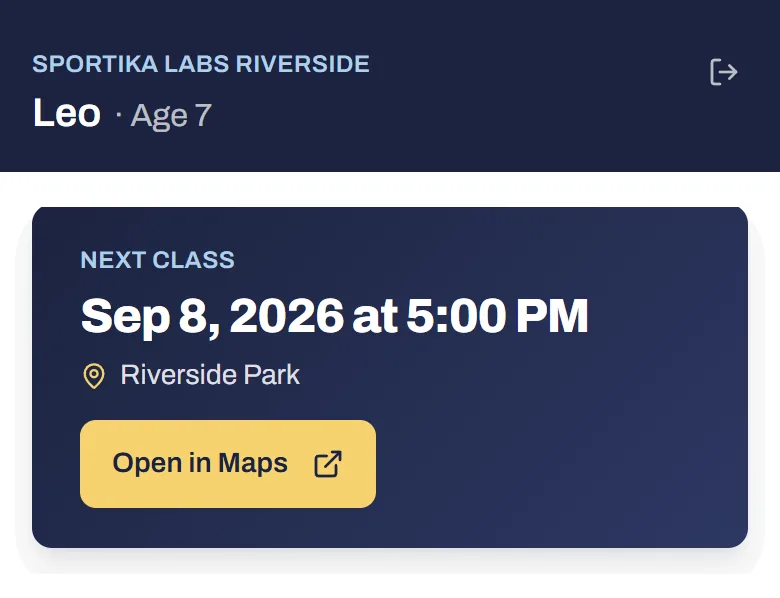
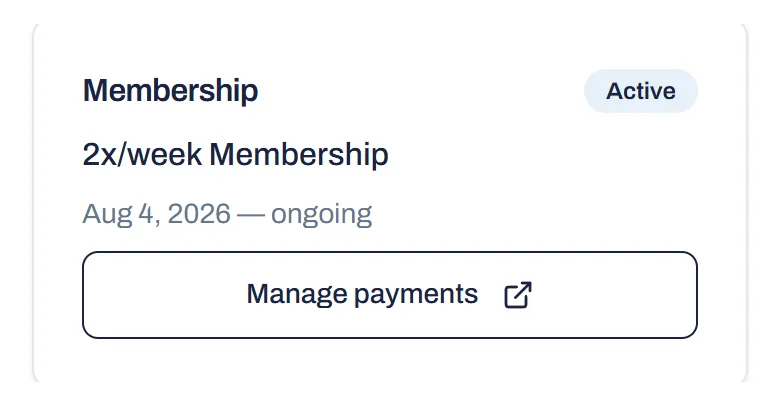
Every family also gets a parent portal, a phone-first page with no app and no password. It shows the next class and venue, the weekly schedule, the membership and payments, the coach’s notes after training and a referral code. It went live in September and comes with the license.
In the CRM, 117 families have booked a trial since July 1, and 93 of them came. Of those, 59 paid for a membership; Stripe, which records every payment, shows 66 new memberships over the same months.
Want an operational model for your city, with your own enrollment and prices?
Leave a request. On the intro call we’ll walk you through an operational model for your city (you add your own enrollment and prices), and we’ll send you our presentation and the venues our AI agent found in your area.
Leave a requestDecision 6: Analytics All the Way to Payment
From day one the account ran with Meta’s Conversions API, a direct connection that reports which ad led to which action. Payments from the academy’s payment pages go back to Meta as purchases, so for every ad we can see whether it brought paid memberships or only cheap leads. The chain runs from the ad to the first message, the trial class, a payment of $129 or $219 and a purchase recorded in Meta.
The same reports showed that ads limited to chosen hours cost $17.07 per lead, against $9.57 for ads running around the clock.
What Our Partner Says
The partner who runs the Austin academy talks about the launch and the first months.
Want our team to run a campaign like this in your city?
Leave a request. On a 20-minute intro call we’ll show you how our marketing team would run the first campaign in your city.
Leave a requestWhere Austin Is Now
With the first groups filled, the academy is now adding capacity. A new venue is opening, and its coaches are going through onboarding with our sports director. Two warm segments are rolling out on top of the cold campaign: people who visited the website or the Instagram account, and past leads who messaged but never came to a trial. As each new venue adds slots, the ad budget goes up to fill them.
Our marketing team runs the campaign with the partner week by week, and a Business Tracker checks venue and coach deadlines on the weekly call. The goal they set for the next stage is 150 to 300 memberships. Whether the academy gets there depends on the partner as much as on the campaign.


Could This Be Your City?
“how do you guys help in marketing and getting people to know about it and sign up and stuff?”
We hear this question on almost every intro call. When we run a campaign like this with a partner, we split the work.
What our team can bring:
- the campaign setup tested on a live academy, adapted to your city;
- the creative library of six waves, with the ad copy and WhatsApp templates;
- the scripts and checklists from the Data Room;
- analytics to payment from the first day;
- a marketing team that runs the campaign for you, and a Business Tracker who goes through venues, coaches and campaign numbers with you on a weekly call.
Part of this comes with the license, and you can run the same setup yourself. The rest costs extra, for example a campaign run by our marketing team from start to finish. Our managers will go over the terms with you.
What the partner brings:
- the ad spend (in Austin, $3,098 for the period on this page);
- someone who answers WhatsApp the same day;
- the venue and group schedule, which sets how many families the campaign may bring in a week.
The budget starts small on purpose, because the first two weeks show what a lead costs in your city. In Austin the first conversations came in during the first week, though the pace in another city will depend on the market and the season.
You can build all of this without a Sportika Labs license, but then you start every test from zero.
A note before you act on any of this: this page is general information about one academy’s results, not legal, tax, insurance, or financial advice. Talk to a licensed attorney or accountant before you make business decisions. The full disclaimer is at the bottom of this page.
Leave a request
Our AI agent maps the venues around you, and we’ll send you the list and our presentation. On the 20-minute intro call we show you the platform live and how a campaign like this one would start in your area. If it is not the right fit, we will say so.
Leave a requestInside a 45-day launch in Austin | What you get with a Sportika Labs license | Sportika Labs vs going solo | Investment details | Insurance, licenses & legal | Frequently asked questions