
Inside a 45-Day Youth Soccer Academy Launch in Austin, Texas
A community event, a platform behind the rest, and the first 45 days or so, told from the inside.
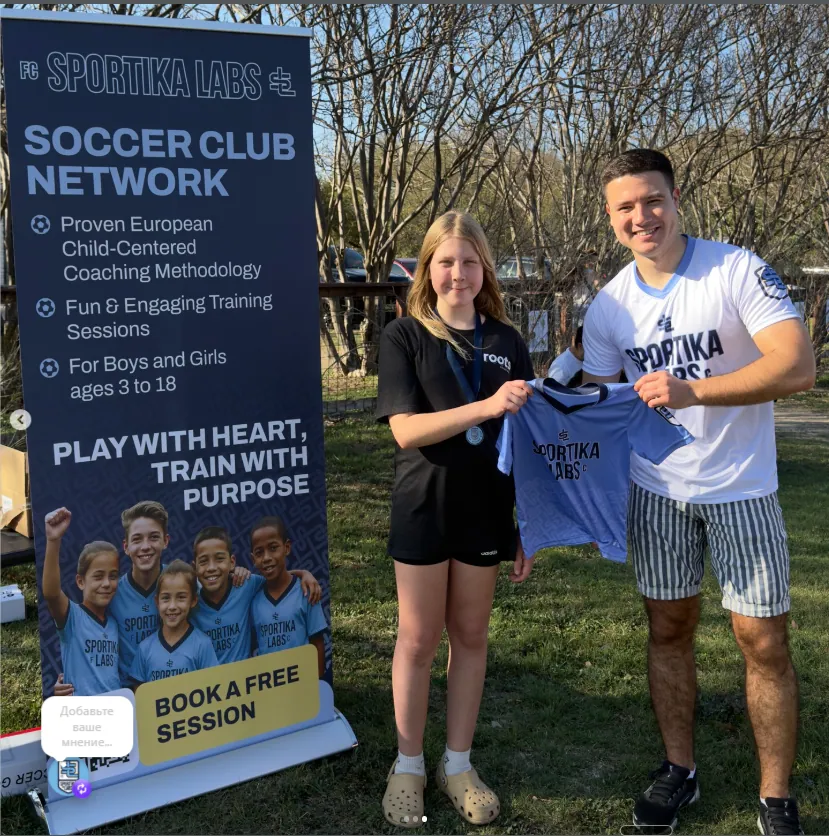
A Saturday morning in Austin, the heat already settling in by ten. At one of the city’s family parks, a community fair is in full swing: strollers, food trucks, kids cutting through the crowd in cleats and flip-flops. In the middle of it sits a navy blue roll-up banner with one word on it, SPORTIKA LABS, behind a folding table and a tablet ready for sign-ups. One man, Tagir Sabirzianov, is having the same conversation over and over again.
Behind that banner is weeks of prep work. The platform is wired up. The marketing kit is unpacked. Three preliminary locations are scoped across the metro, and the methodology and funnel tools are live and waiting for the first families. The community fair is the first time any of it goes public. Tagir has one question to ask, the only one that matters this morning: would your child come?
Twenty families say yes. By the end of the day, twenty contact records sit in the platform back at his desk, and the Austin academy is officially live in the world.
This is the story of how that morning was set up, and what happened in the weeks before and after it.
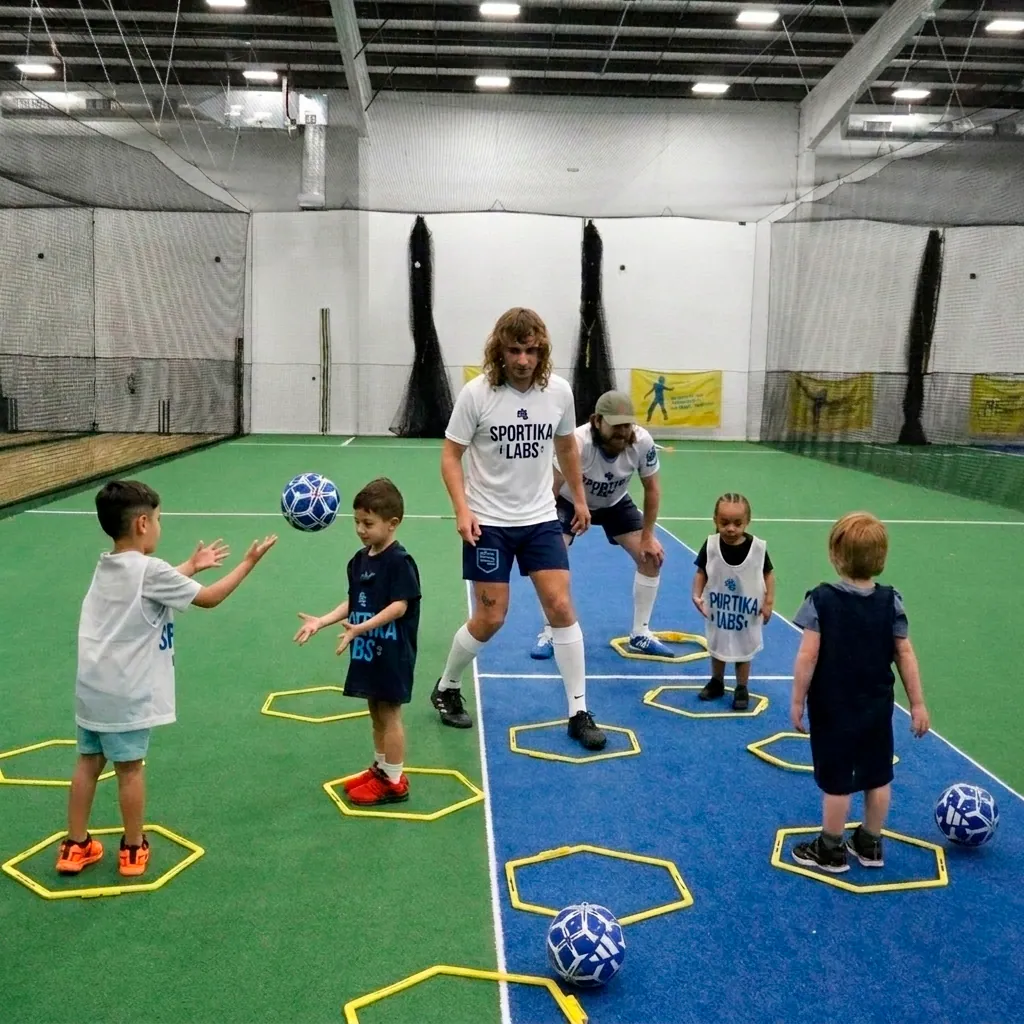
Who’s Running This Thing
Tagir is a Customer Success leader at Smartly, one of the larger martech platforms on the market. His day job runs inside SaaS dashboards, helping enterprise clients get more out of their software. His other life is in soccer. He played long enough to know he wasn’t going to make it as a professional, became a US Soccer-certified referee in the States, and has officiated youth tournaments alongside academy squads from clubs you’d recognize on TV.
He moved to Austin a few years ago. He had a feel for the game and a knack for running things, but no obvious way to pull both into one project. That changed when he heard that the team behind one of the largest youth academy networks in Europe was launching in the United States. Tagir reached out, looking to collaborate. There was a Customer Success role open, and he asked whether he could be useful in it.
He came in for that conversation. He stayed for a different one. After seeing the platform from the inside (the methodology, the operational playbooks, the launch roadmap built into the software), he had a question for the team. Could he run a school of his own?
The answer was yes.
Day One: The Launch Roadmap
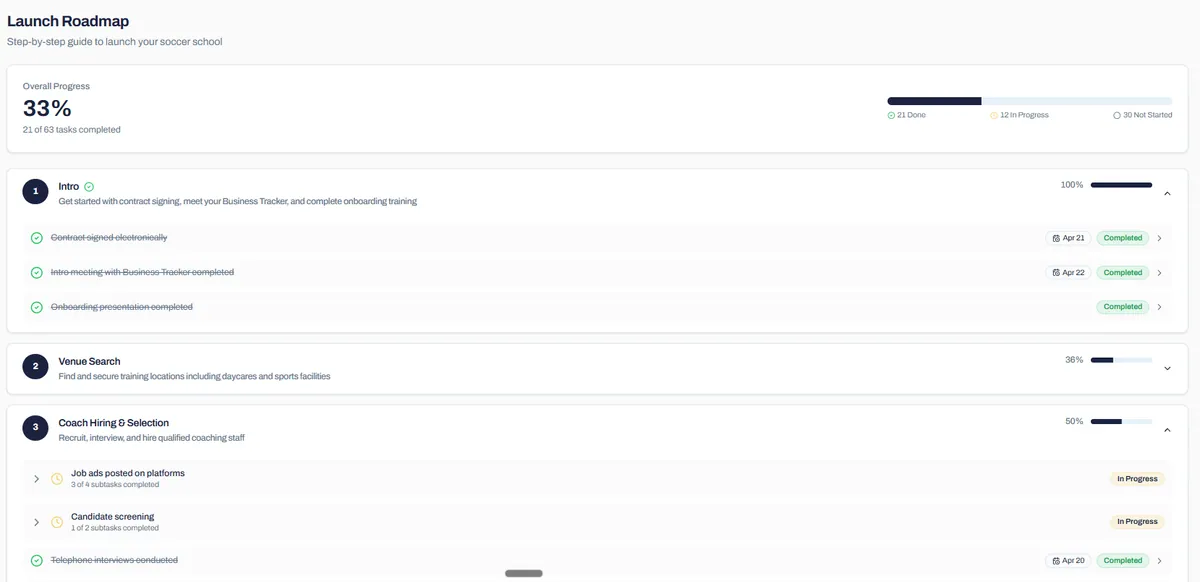
Most license programs hand you a binder, a login, and wish you luck. Sportika Labs hands you a roadmap inside the platform: a step-by-step task board where every milestone from license signing to first enrolled families has a deadline, a checkbox, and a direct link to whatever Virtual Data Room file is needed to complete it. Plus a real person on a weekly call.
Tagir’s first month had two anchors.
The Launch Roadmap inside the platform. Every morning, he opened the dashboard, saw what was due, and clicked through to the materials: venue checklists in one folder, coach interview scripts in another, marketing templates in a third. Nothing to hunt for, nothing to figure out from scratch.
A weekly call with his Business Tracker. Same time, same day. They reviewed the roadmap together: what got done, what didn’t, what was stuck. Whatever came up that week got worked through on the call: a venue manager who wasn’t returning messages, a coach interview that surfaced an unexpected concern, a question about how to position the program against an established local club. As the launch progressed, the calls’ center of gravity moved from setup to conversion.
That weekly cadence is what makes the timeline plausible. About forty-five days from signed license to first enrolled families is what tends to happen when an experienced operator runs a tested sequence with someone holding them to it.
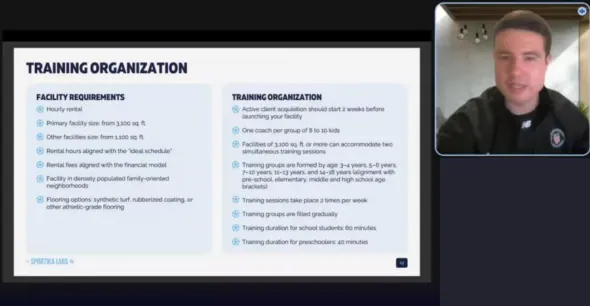
The platform’s onboarding includes structured video modules covering every part of the launch: venue selection, coach hiring, equipment, marketing setup, financial planning. They exist because every step has predictable mistakes, and watching someone else’s costs less than making your own.
The whole system, the roadmap, the playbooks, the weekly tracker call, is calibrated for an academy to reach first revenue in roughly 45 days. That’s the cadence the platform was built around, not a marketing target attached to it after the fact.
Choosing Where to Play
Location decides. Not because youth soccer is fragile (the model is capital-light enough to recover from a bad first pick), but because the wrong room costs you weeks you don’t get back.
Austin worked partly because the city is dense with rentable space: indoor soccer arenas, YMCAs, community recreation centers, public school gyms, athletic clubs, church multi-purpose halls, and a long tail of tennis and racquet facilities. The Sportika Labs development team starts every territory with an internal AI agent that maps available infrastructure and scores how attractive each market looks before a partner signs. The same overview is available during the initial consultation, so a prospective partner can see what their city looks like on paper before any commitment. Austin scored well.
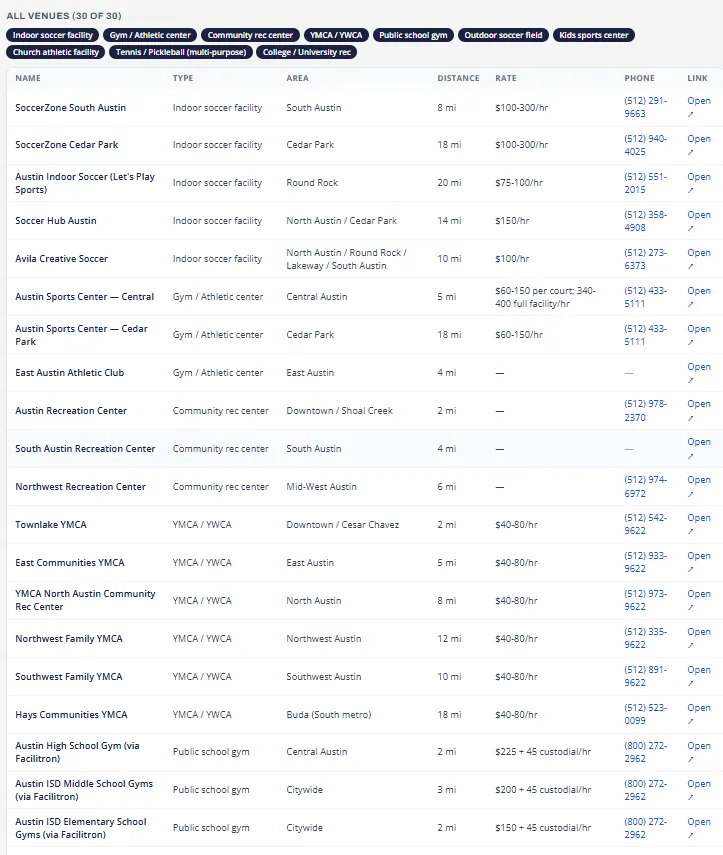
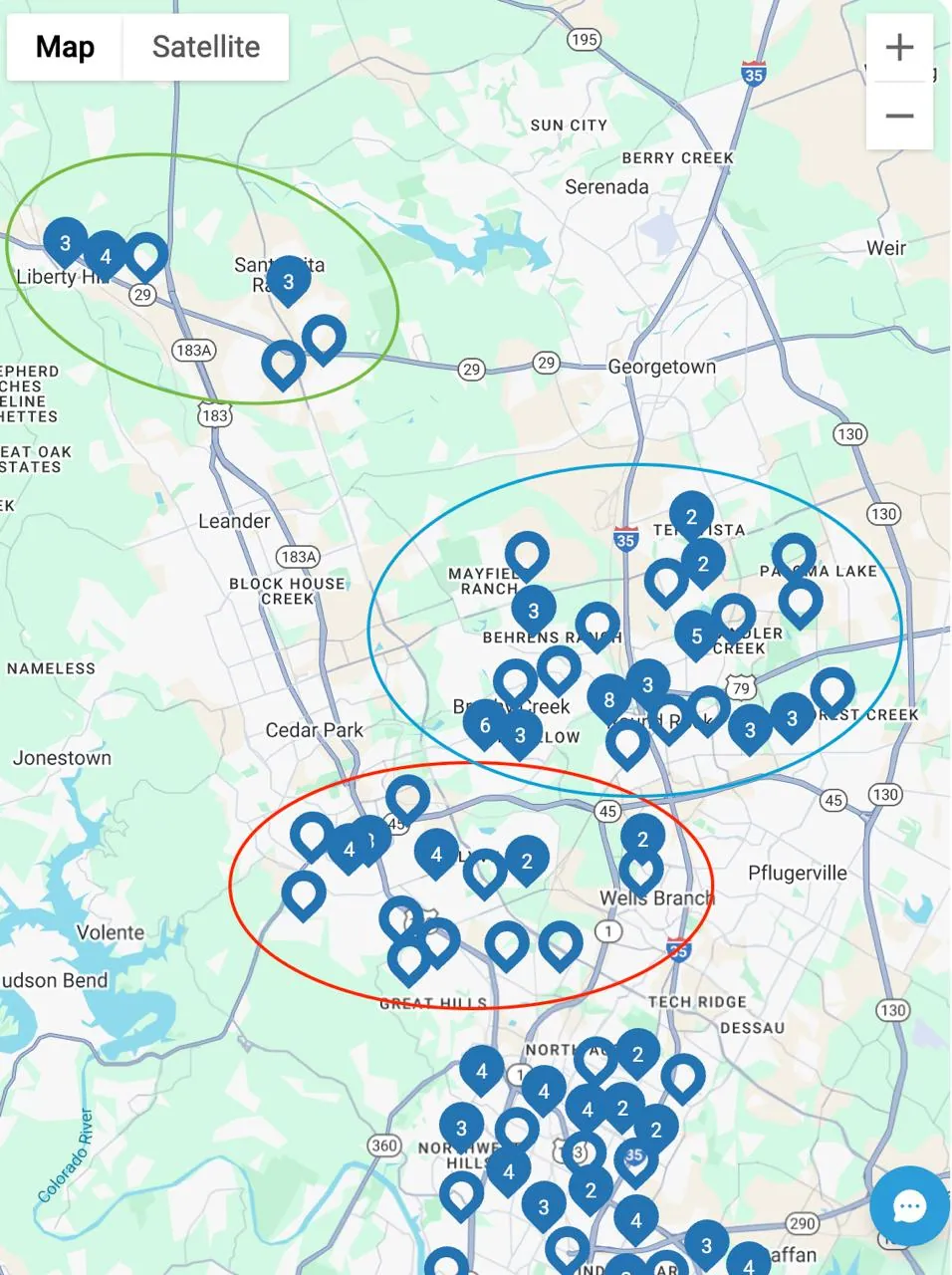
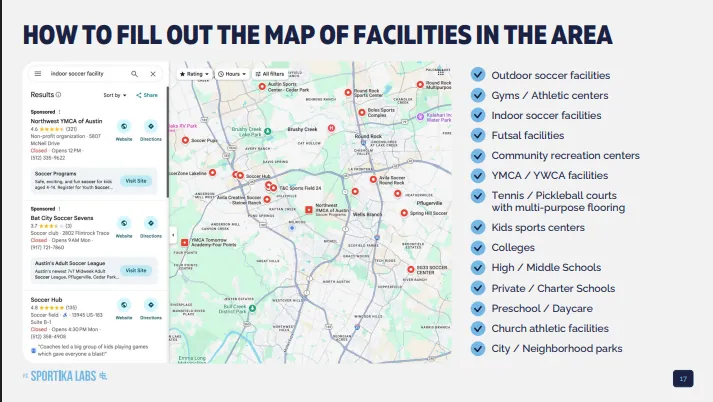
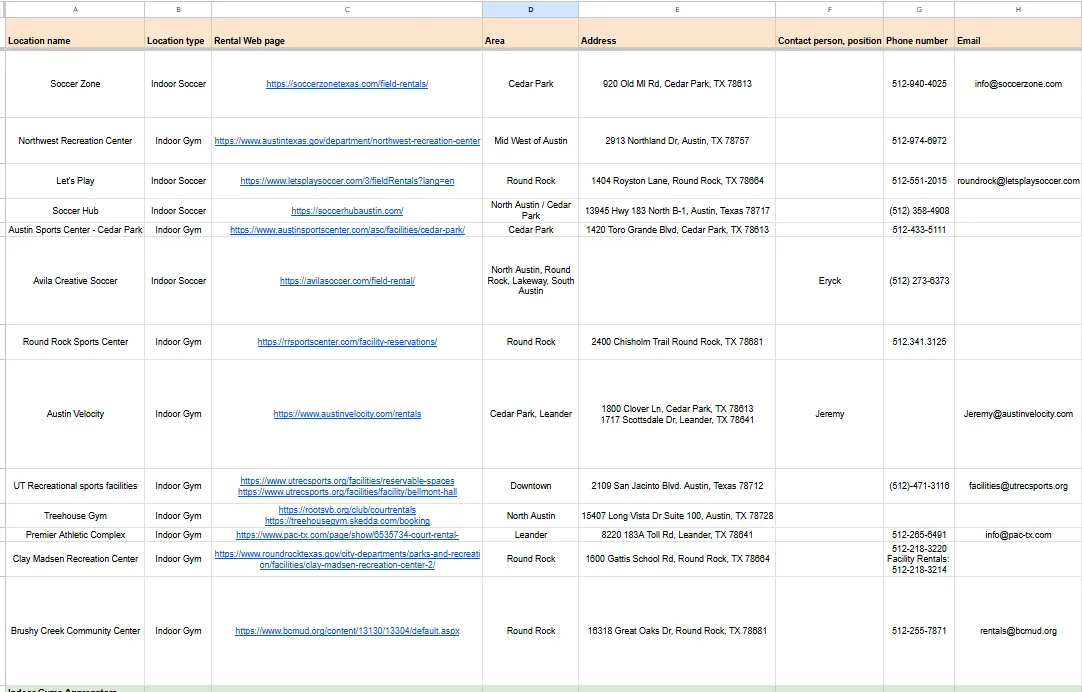
Once Tagir was on board, the work got specific. The platform’s location checklist walked him through what to look for: hourly rental over long-term lease, family-oriented neighborhoods, surfaces that work for 4-year-olds and 12-year-olds in the same week, and parking parents won’t fight to find. He pulled together a master list of thirty locations across the metro and worked through them with his Business Tracker.
A common mistake at this stage is thinking the academy needs an impressive-looking soccer facility, a turf field with the lights, a freshly painted indoor pitch. Sometimes that’s right; often it isn’t. A 430-square-foot space, like a dance studio or a cleared-out multipurpose room, is enough to run a preschool group. Parents tend to prefer rooms they can park at easily, coaches prefer rooms where balls don’t fly, and the financial model prefers hourly rental that scales with attendance.
When it came time to negotiate, Tagir didn’t walk in with just a pitch. He walked in with a Sportika Labs presentation deck (the partner-facing version) that explained the program, the methodology, the safety standards, and what a typical week of bookings looked like. Operators armed with that kind of deck tend to land better terms than operators improvising from scratch, and the gym and rec center owners on the other side of the table were dealing with someone serious.
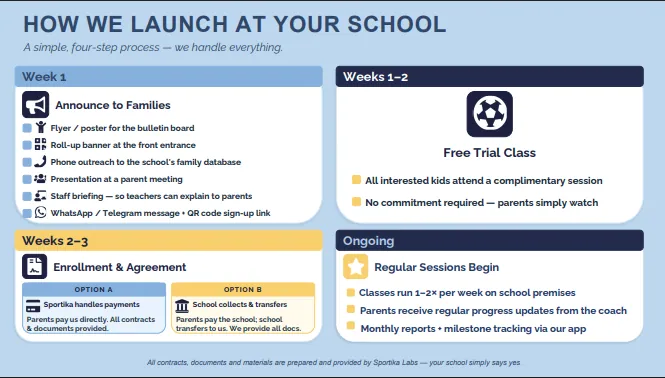
The same deck doubles for B2B outreach. Sportika Labs supplies a separate kindergarten and elementary school pitch package that includes outreach scripts, the program flyer, and a four-step “How We Launch at Your School” template. That track is queued up for the new school year.

Building the Bench
A platform doesn’t coach kids; people do. The hardest part of any sports launch is finding the right ones.
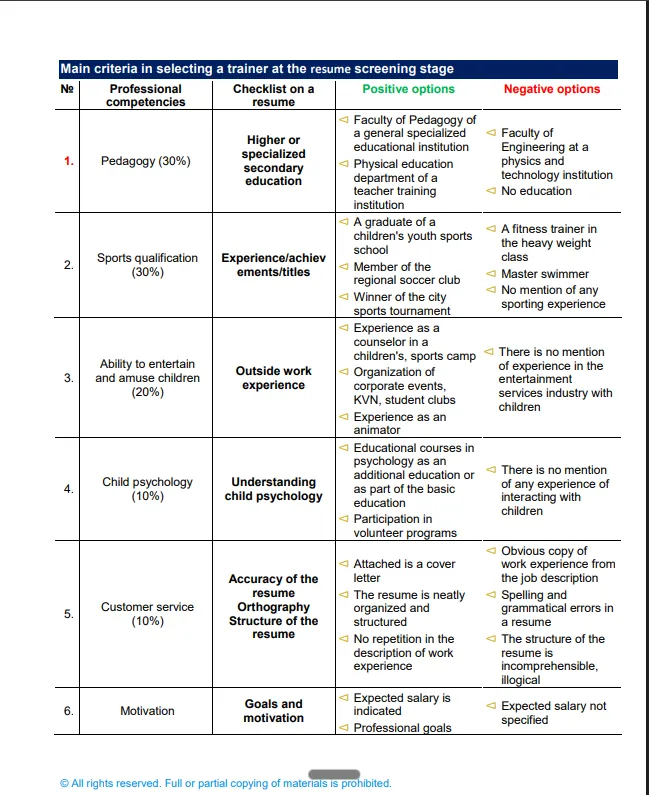
The HR pipeline starts with a vacancy template that covers what to write, where to post, and how to source. Resumes come in, and AI-assisted screening on the platform pulls out the strengths of each candidate while flagging things worth probing in an interview. Tagir worked through the funnel using interview scripts pulled from the Virtual Data Room and a structured post-interview checklist. His Business Tracker reviewed the shortlist. He hired experienced coaches with backgrounds in soccer and youth development.

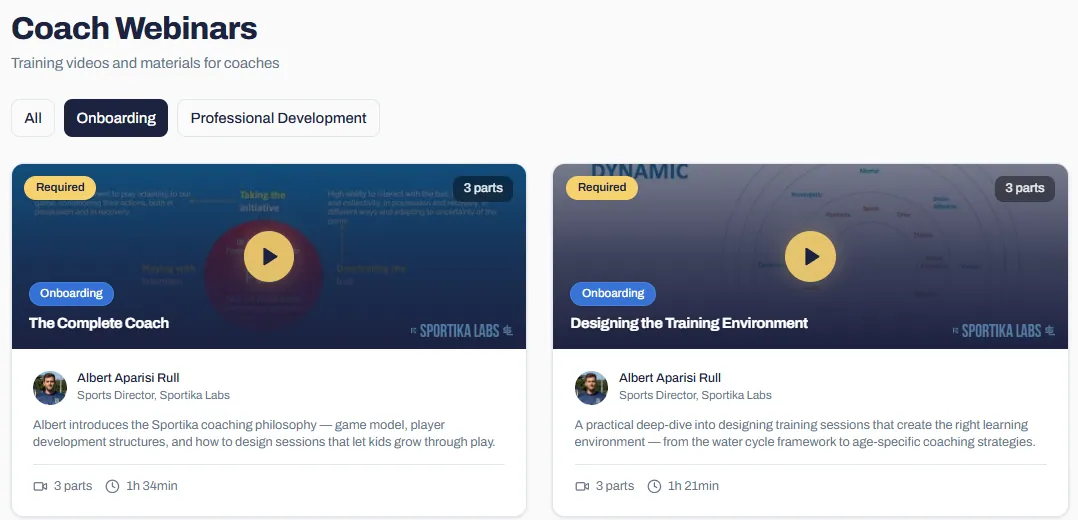
The coaches also go through their own onboarding once hired. Most of it runs live, with the people who actually built the methodology.
Albert Aparisi Rull, the Sports Director of Sportika Labs, runs the bulk of it. Albert holds a UEFA Pro License. Before joining Sportika, he was Coordinator and Coach at FC Barcelona Academy Pro New York, and earlier a coach inside FC Barcelona Academy itself. A sports director at that level personally training the coaches inside a small Austin academy isn’t something most independent programs can offer.
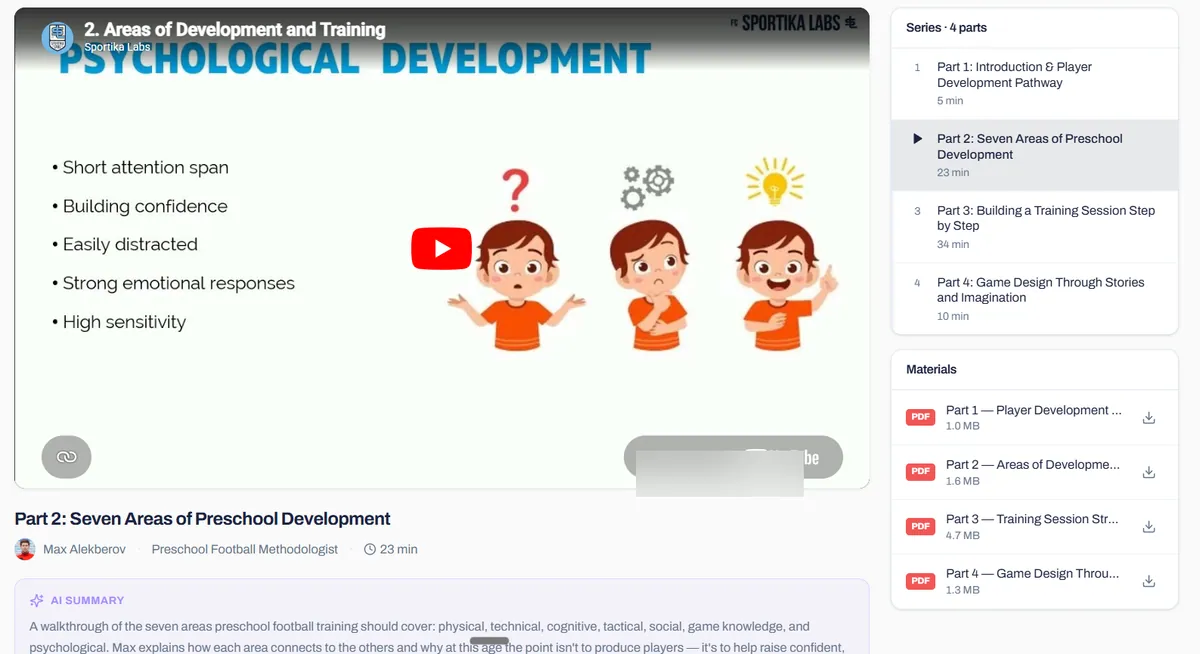
For the youngest age groups (3-7), there’s a dedicated track from a Sportika preschool football methodologist: about 72 minutes of guided video, plus PDFs and AI-generated module summaries so a coach can refresh on the drive to the field.
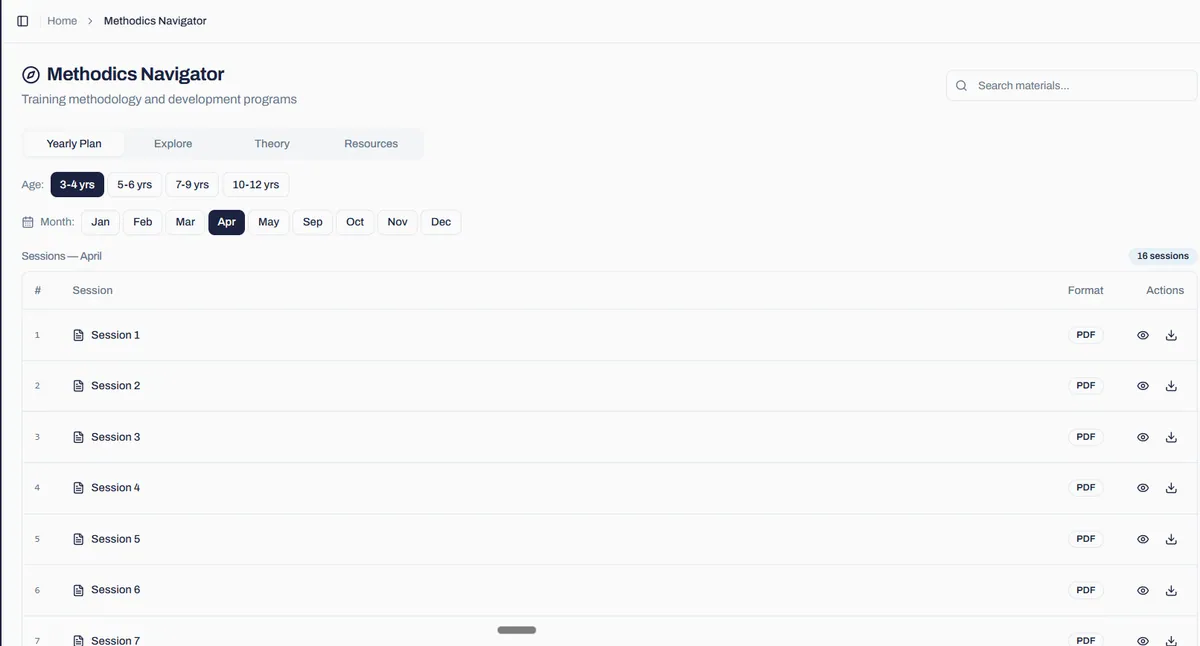
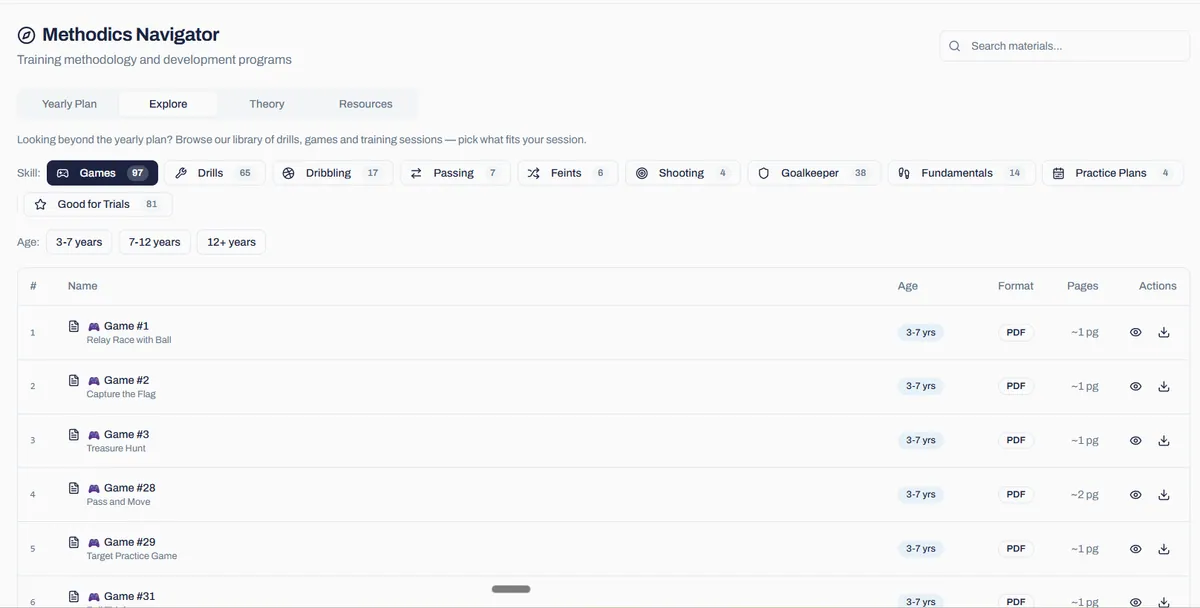
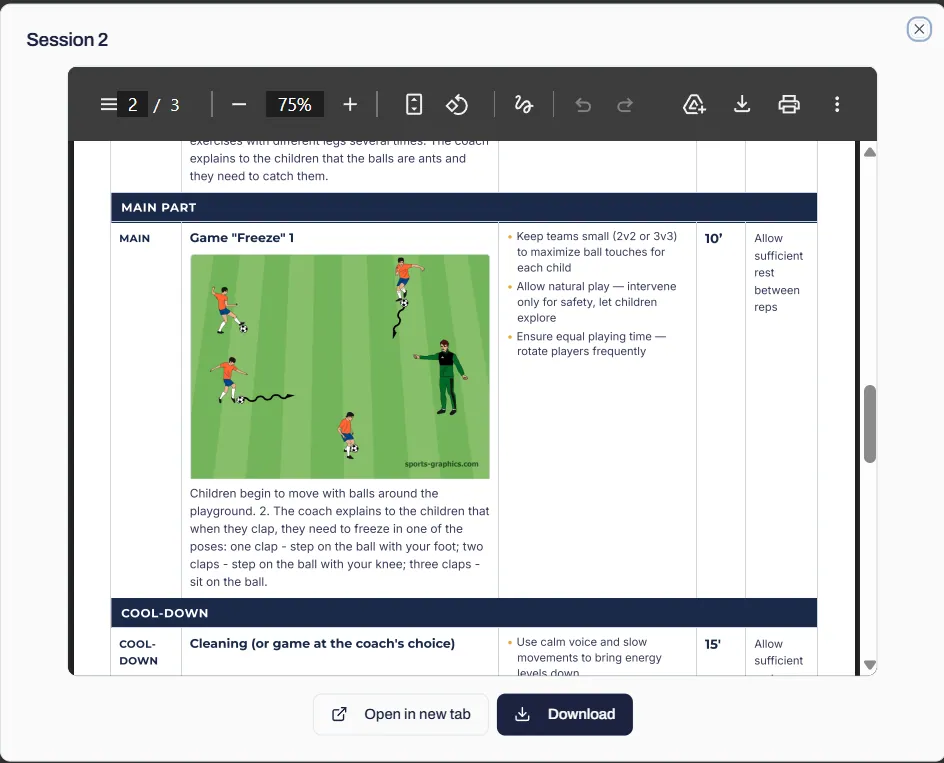
Once the coaches have done the onboarding, they get the Methodics Navigator: a curriculum library with a year of structured sessions for every age group, plus a searchable library of drills and small-sided games. A coach can teach the day’s plan as written, or build a custom session by filtering drills by age, skill, and available equipment. The methodology keeps evolving, with new exercises and full sessions added regularly.
The bridge between the coaches on the field and the people who built the methodology is the part most independent academies don’t have. Sports directors with UEFA Pro licenses and experience at Champions League academies, Bundesliga youth programs, and national team staffs give written feedback on training videos and chat directly with coaches inside the platform: pre-training questions, post-training reviews, whatever surfaced in the parent group chat that week. If a topic gets enough traction, it becomes a webinar with an outside expert: sports nutrition, parent communication, tournament prep, usually pulled from a top European or American academy.
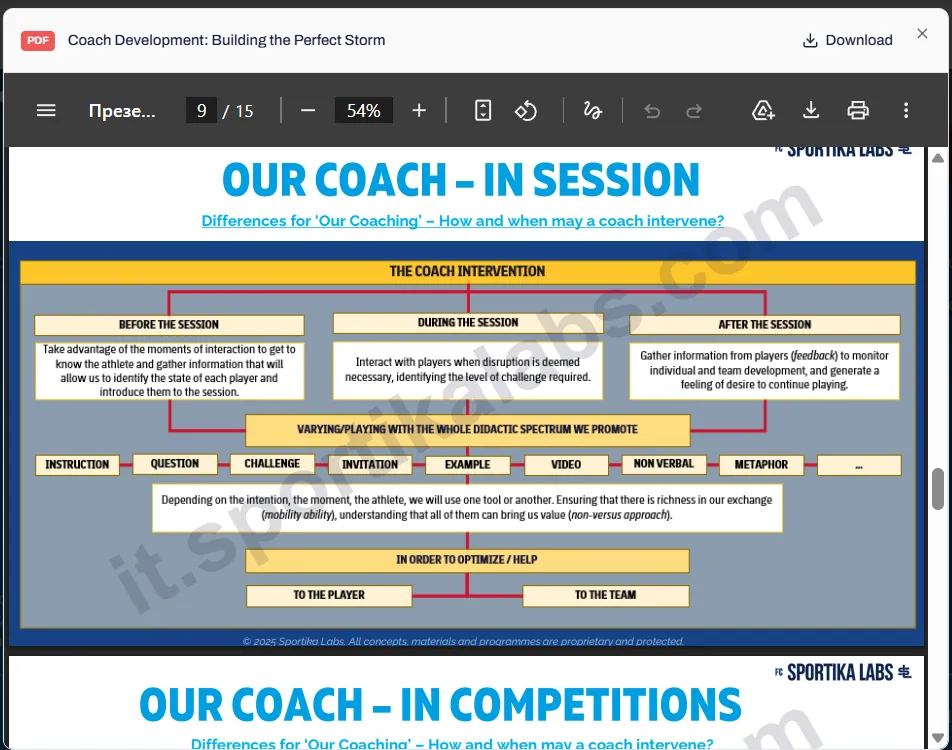
The result is something independent academies can’t easily match in the United States. A coach in a Texas suburb shares a coaching room with directors who’ve trained players through European top-flight youth systems, with the same playbook, the same review cadence, and the same direct line of feedback. Sportika’s remote tools turn the distance into a non-issue.
“It’s like having your own coach, every week.” That’s how the platform tends to feel for a working academy coach.
The Marketing Engine
Once the locations are locked in, the marketing onboarding kicks off. Sportika Labs walks every partner through what produces leads in youth sports: which channels work and which don’t, cost-per-lead numbers by source, and which local events are worth showing up to.
From that, partners build a media plan together with the tracker, channel by channel, online and offline. What to expect from each. What to test first. Tagir’s looked something like this:
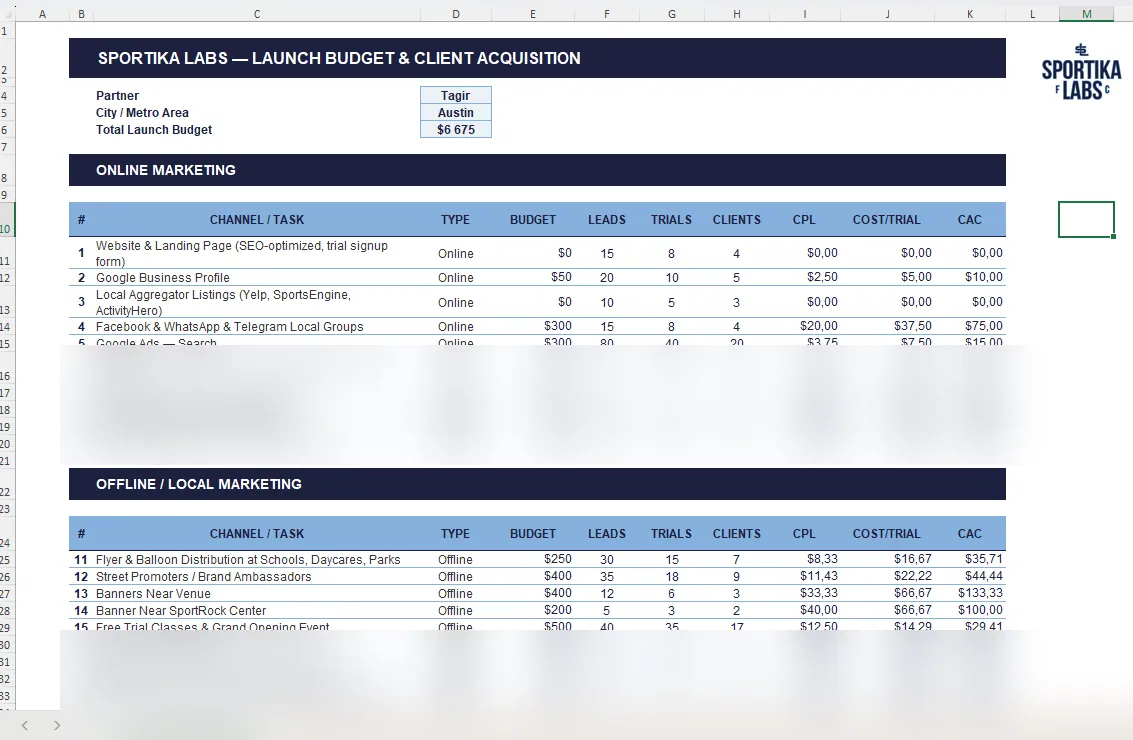
He also built a calendar of activities in a shared doc (events, posts, school-year touchpoints), and started executing.
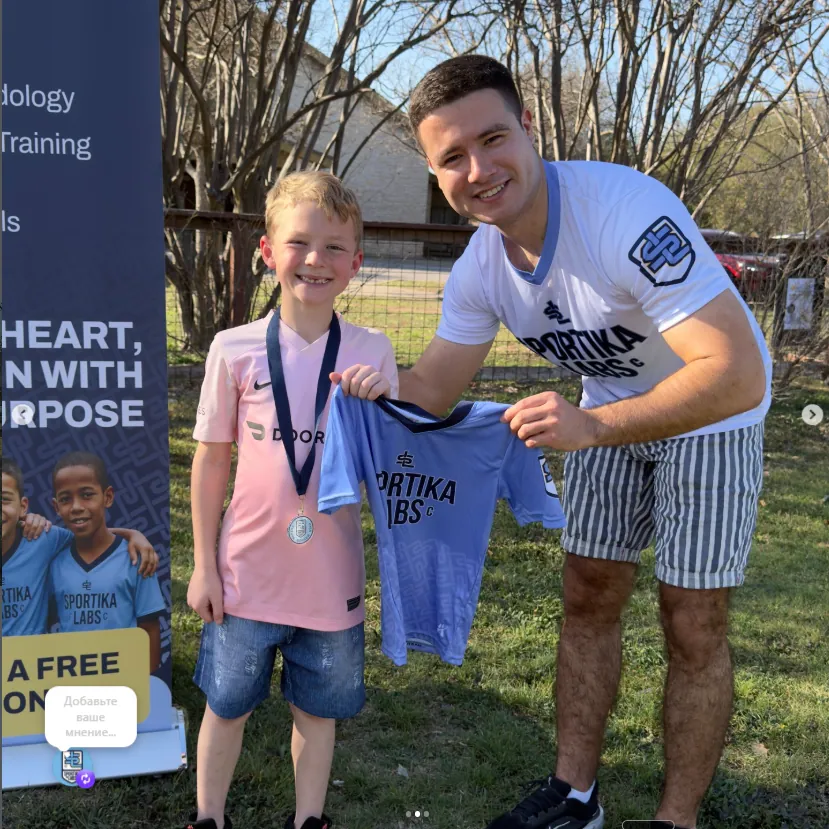
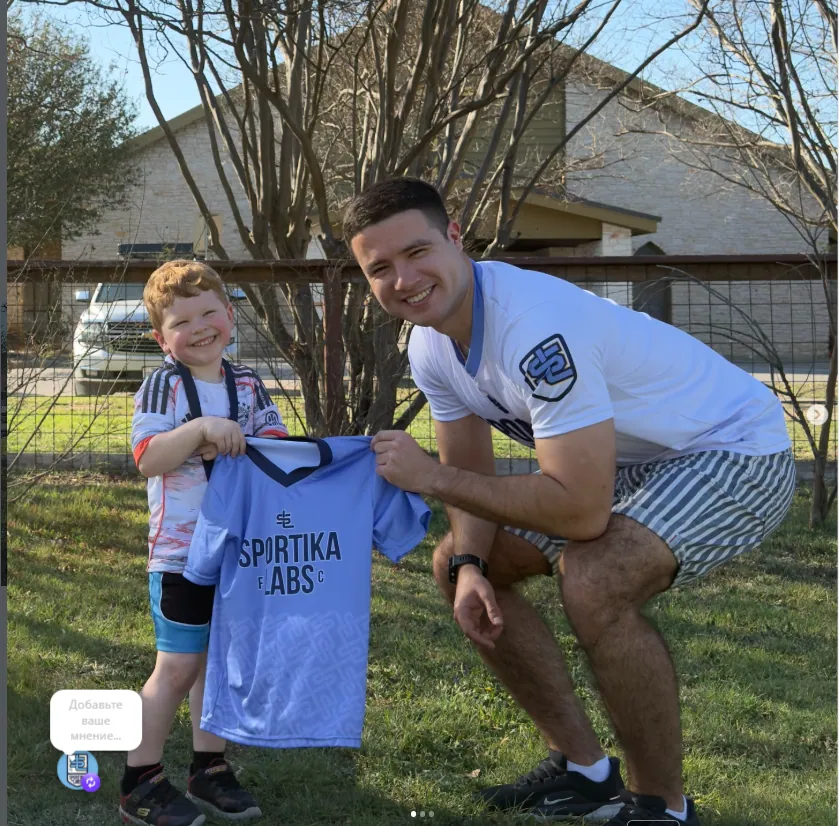
The community fair was the first big test. Tagir set up a roll-up banner from the marketing kit, laid out flyers, and kept a tablet ready for sign-ups. Twenty families talked to him, and twenty leads went into the CRM that night. He was already naming the preliminary locations and approximate session times in those conversations, which doubled as live demand-testing for those exact spots.
The channel that did the heavy lifting, though, was paid social. Sportika Labs offers performance media as a service for partners who want it, running Instagram and Facebook campaigns built specifically for youth soccer, with creative, targeting, and bidding tuned from running the same playbook in other markets. (Partners can also run ads themselves using the same creative kit, and many do.)
Tagir took the service, and the campaigns brought in more than 200 leads at around $8.60 per lead, fast and predictable. Most of the work happens on the platform team’s side (setup, optimization, creative iteration), which leaves Tagir’s time for the families themselves.
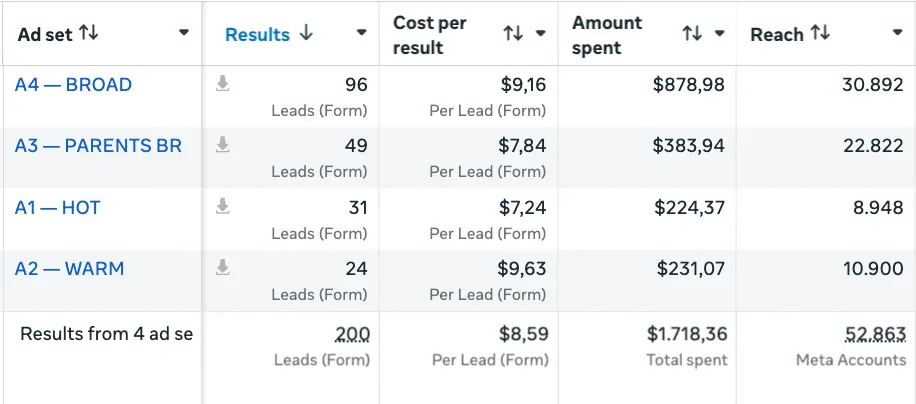
Three web properties feed this funnel:
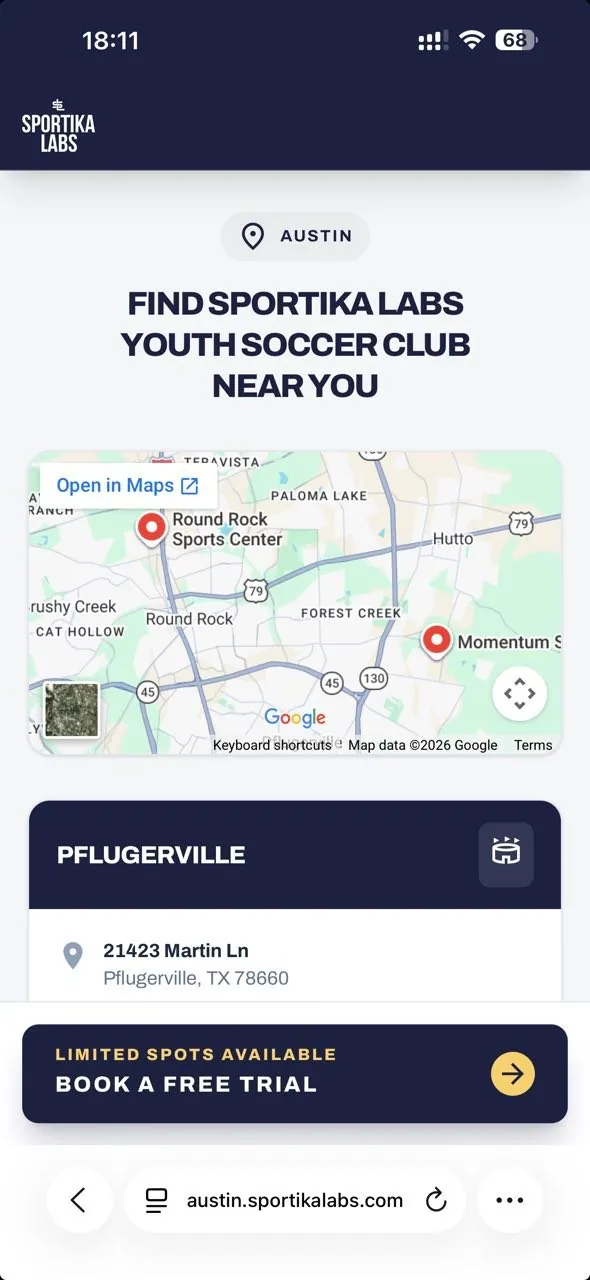
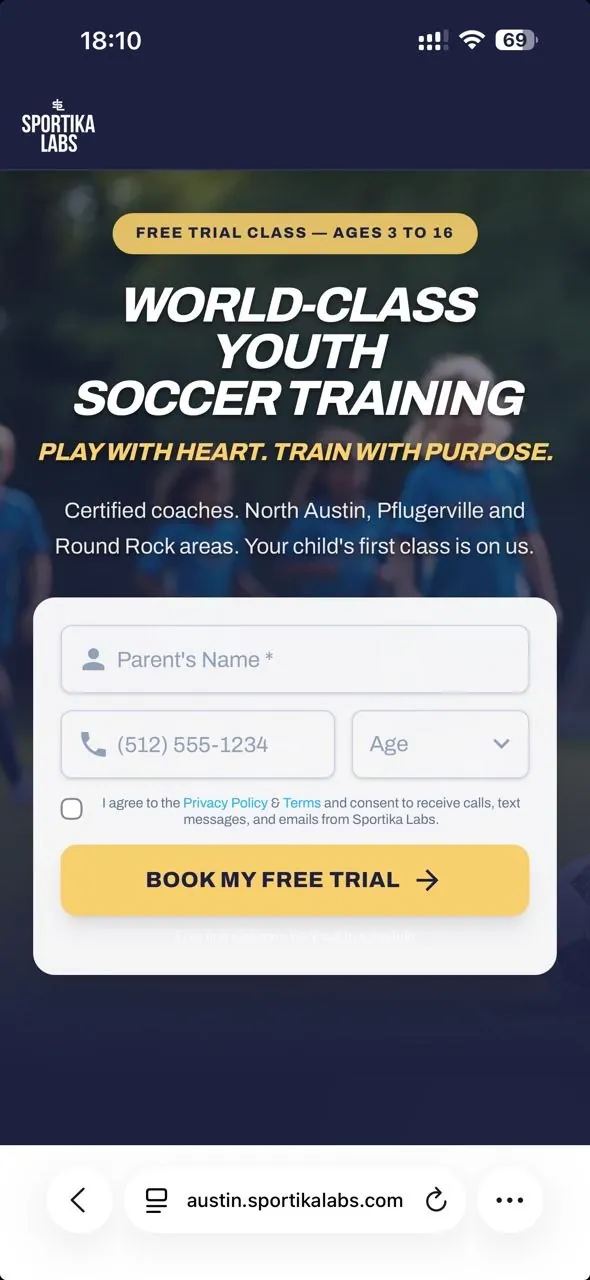
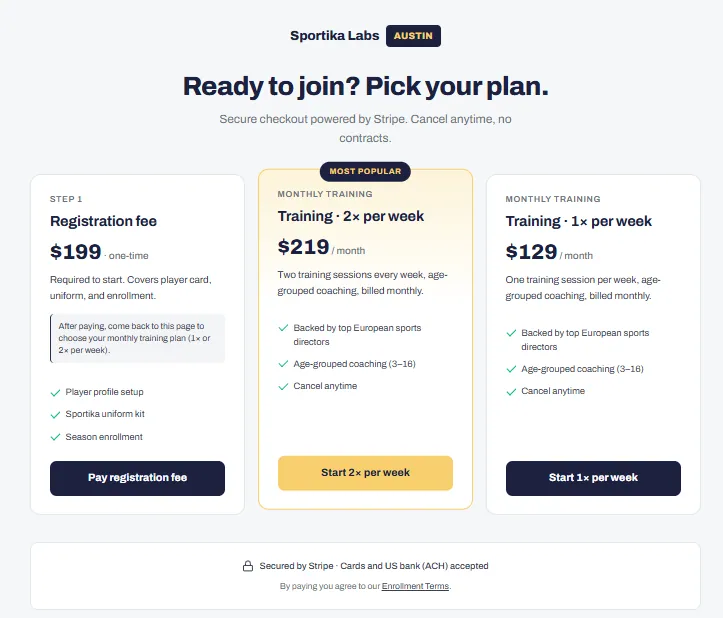
sportikalabs.com— the brand’s main site. Draws organic traffic from across the country and routes interested parents into the right partner.austin.sportikalabs.com— a mobile-first landing page built specifically for Tagir’s territory, tuned for paid social and event traffic. Most parents click ads on their phone, so the page is built phone-first.austin.sportikalabs.com/pay— a mobile-friendly Stripe checkout where parents finish registration and pay for memberships from the field, the parking lot, or the couch.
The Stripe Connected Account was set up with Sportika Labs as the managing entity. Legal documents, enrollment terms, and tax information were preloaded so Tagir could accept payments from day one, and the processing fee scales down as the network grows. Solo operators don’t get pricing like that.
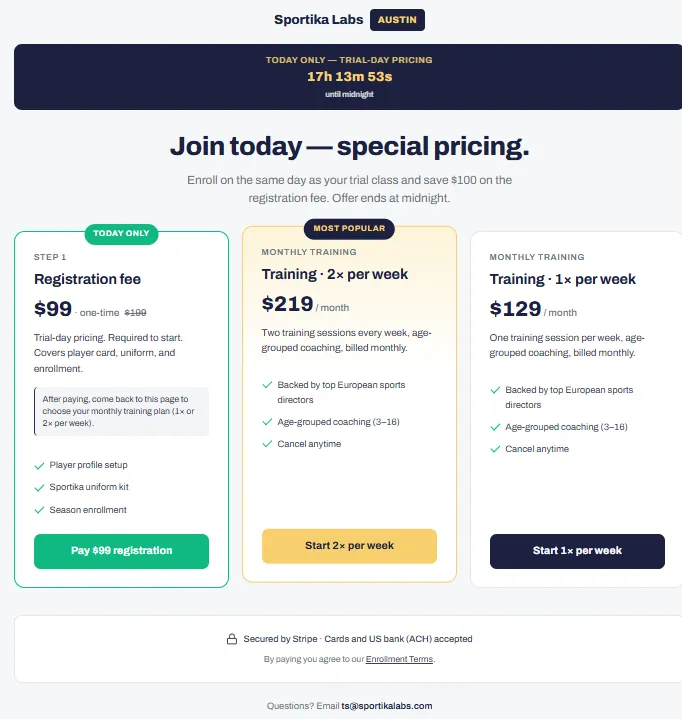
When Tagir wanted to test a discount on the registration fee for parents who paid on the same day as their trial session, the platform team built and shipped a separate same-day pricing page with the offer, live within a day of the request.
The Funnel
Lead capture is one thing. Converting a stranger into a paid family that shows up at 5:30 PM on a Tuesday is something else entirely.
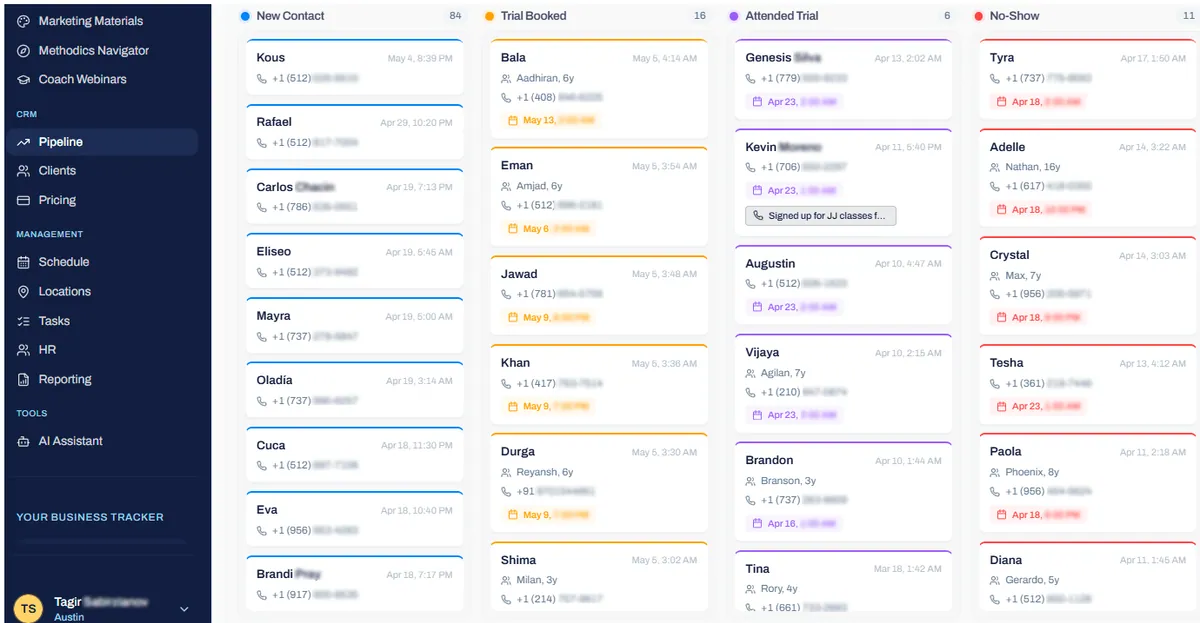
Every lead, whether from a paid social ad, a sign-up at the community fair, the main site, or the Austin landing page, lands in the same CRM. Each family sits in one of five stages: New Contact, Trial Booked, Attended Trial, No-Show, Subscribed. Tagir can see where every family is and what comes next.
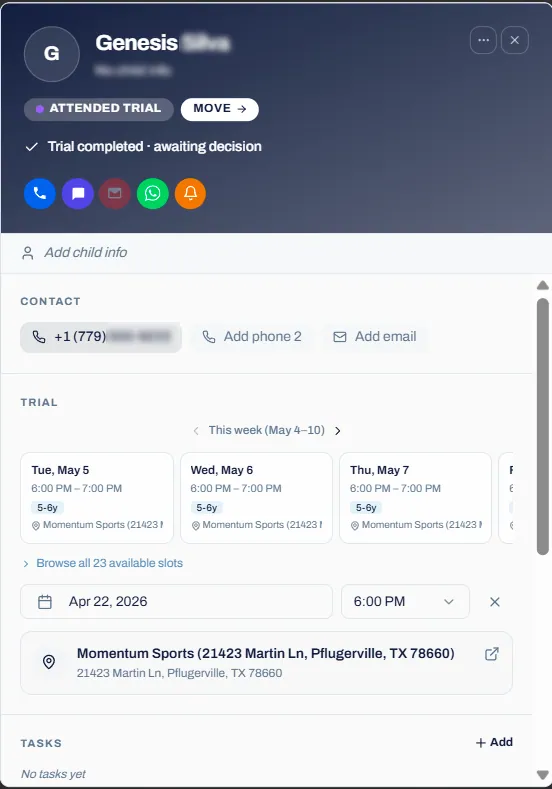
Drilling into a single family pulls up their child’s profile, scheduling, and notes, without any tab-switching or spreadsheet-juggling.
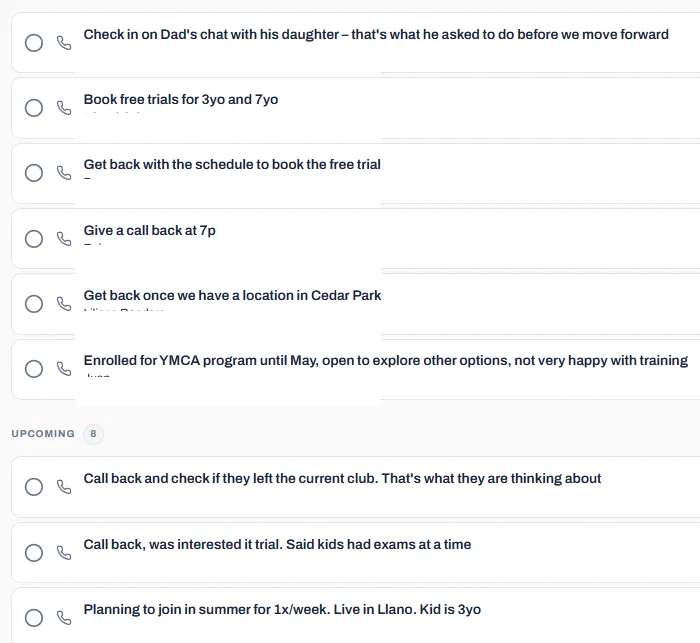
This is the same platform Tagir uses for the Launch Roadmap, the methodology library, the coach onboarding, the HR pipeline, and the trial booking. One window, one login, one source of truth. He doesn’t context-switch between five different tools to run a single family through a single funnel.
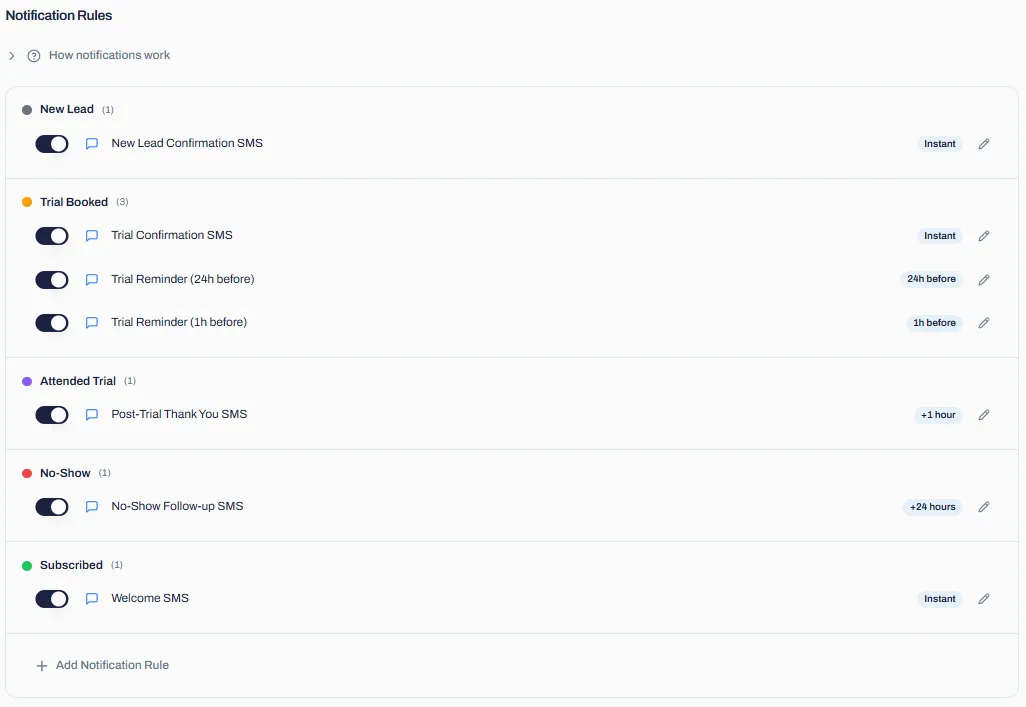
Behind the pipeline runs an automated SMS sequence built for the way parents behave:
- New Contact — instant confirmation text so they know the request landed.
- Trial Booked — confirmation, a 24-hour reminder, and a 1-hour reminder before the session.
- Attended Trial — a thank-you text an hour after the kid leaves the field, while the experience is still warm.
- No-Show — a follow-up text 24 hours later asking if they want to reschedule.
- Subscribed — a welcome text the moment a family pays.
A general-purpose CRM, like Salesforce or HubSpot, can do most of this in theory, but the configuration cost of making it work for a youth soccer academy is real. Multiple locations. Linked parent-child records. Trial-day scheduling. Birthday reminders for the child, expiry alerts when a parent’s membership is about to lapse. Most teams give up halfway and end up using whichever fields they managed to wire in correctly.
The Sportika Labs CRM is built for this specific job: kids’ soccer school operations, with multi-location, parent-child linking, and the data model designed around how families actually move from interest to enrollment. The platform is built to help the operator earn revenue, not to act as an admin backup the way a lot of generic sport CRMs do.
This isn’t a general-purpose CRM bent into shape. It’s software built around how youth soccer families actually move from interest to enrollment.
Belief on the Field
A lot of youth soccer programs in the US have inventory of some kind, but the details aren’t fully worked out. There’s a t-shirt or a branded ball, sometimes a flyer. What’s usually missing is the small stuff: a sticker journal kids want to fill in, a printed medal for the trial day, a jersey with the kid’s name and number on the back, a properly produced welcome pack the family takes home. The full kit line for ages three to seven is often missing entirely; programs only get serious about gear when the kids hit six or seven.
Sportika Labs partners get all of it on day one. And because the partner doesn’t own the room, the brand has to do more of the work to make a community center feel like an academy. Branded bibs, branded medals, the navy roll-up at the door, the welcome pack a family carries to the car: together they create the impression of a club with its own way of doing things.
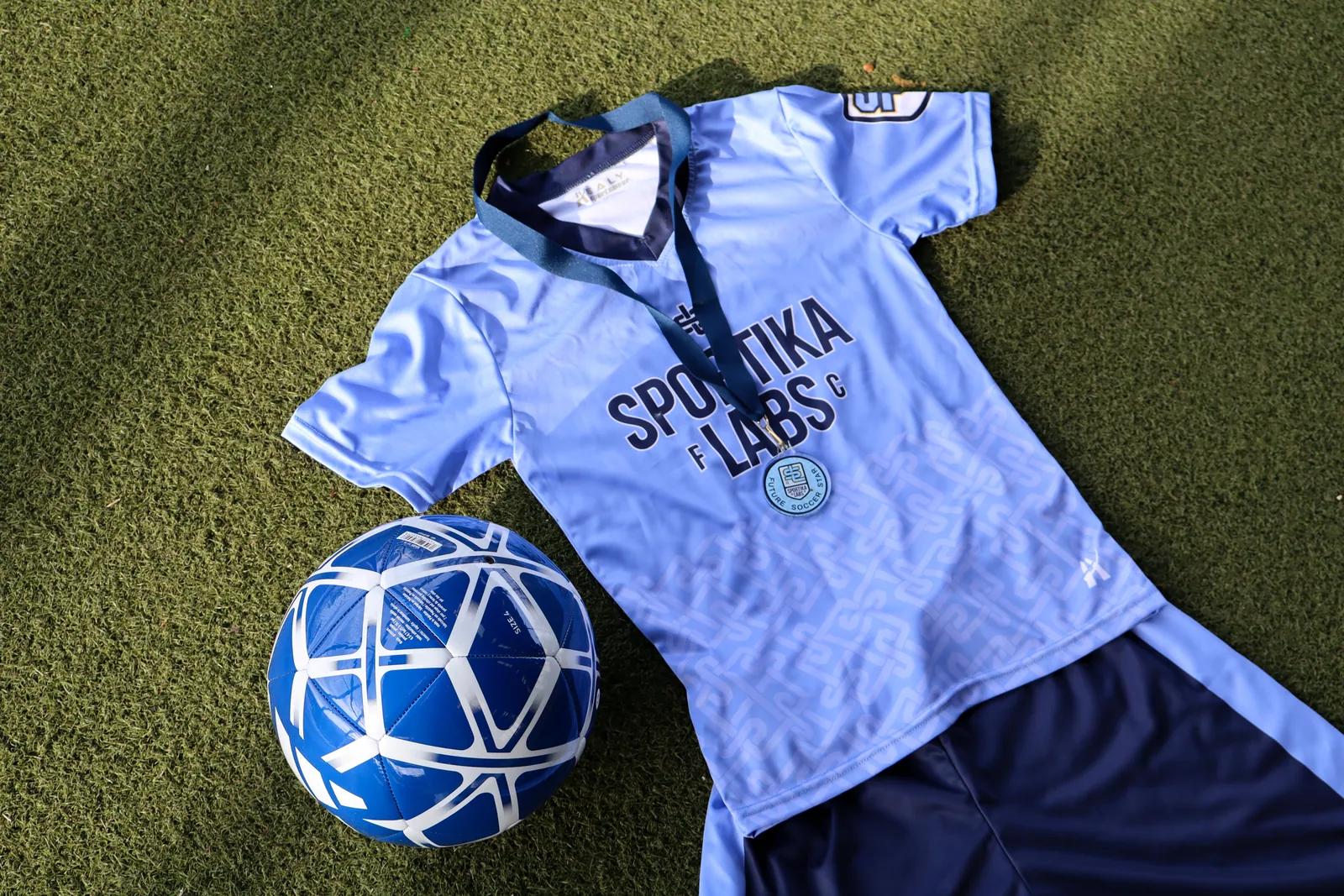
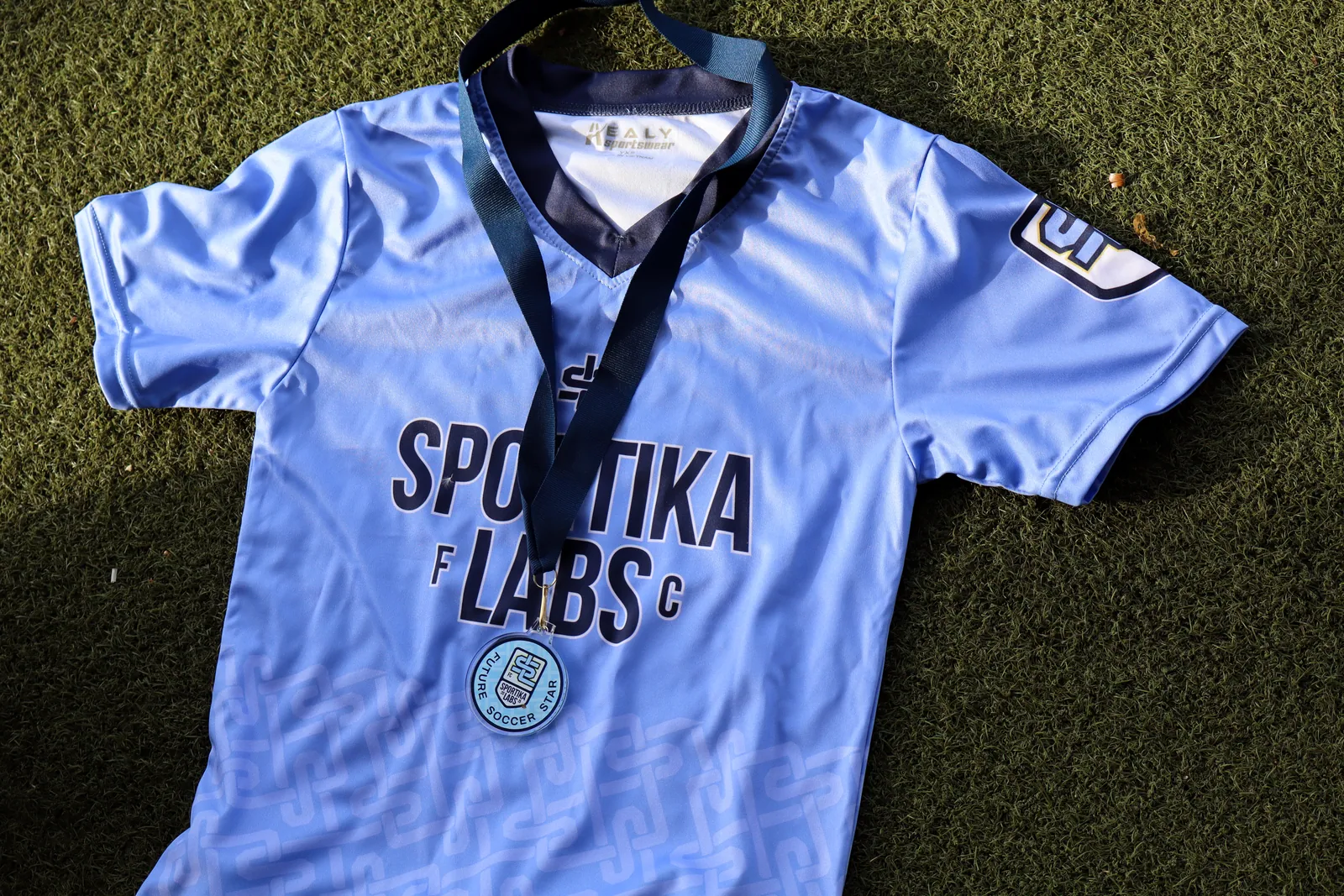
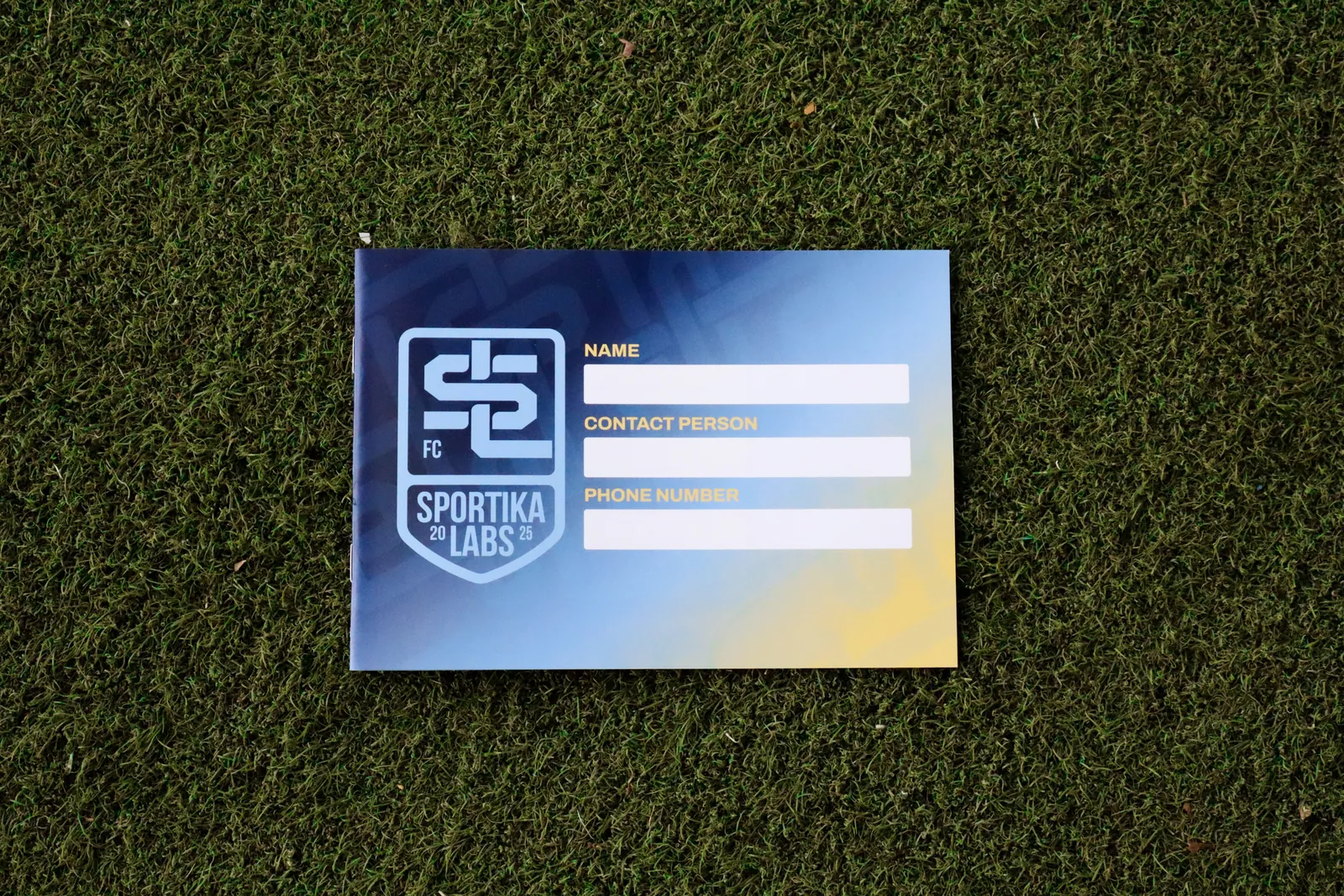
Every partner orders a welcome pack when they sign: kids’ uniforms, coach gear, training bibs, lightweight backpacks, Panini-style sticker journals, and trial session medals. The pack is sourced through Sportika Labs at network pricing, the kind of cost of goods solo operators can’t get from suppliers in single-academy volumes. There’s no vendor hunting, no sample shipments, and no pallet of returns to argue about. The kit shows up ready to use.
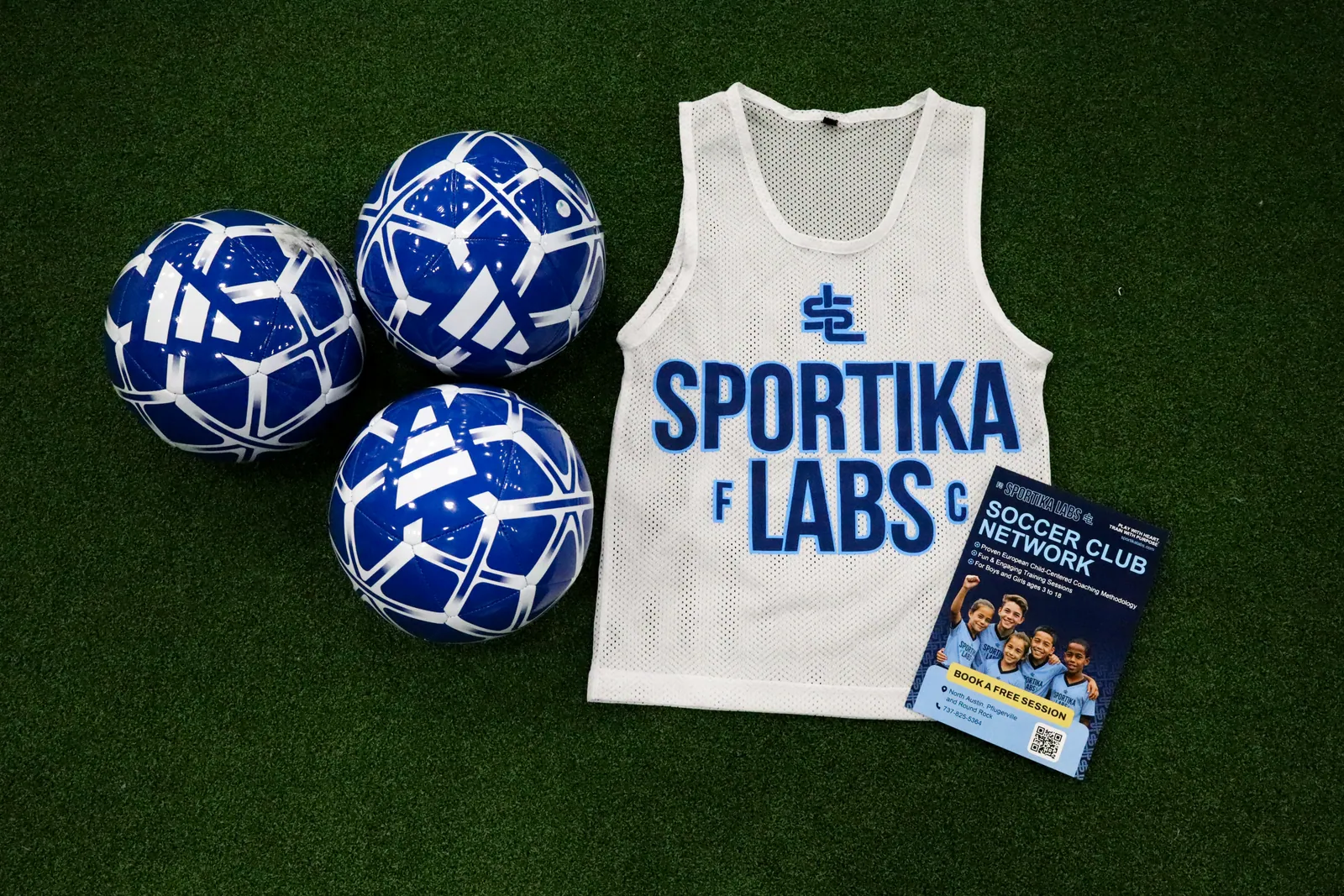
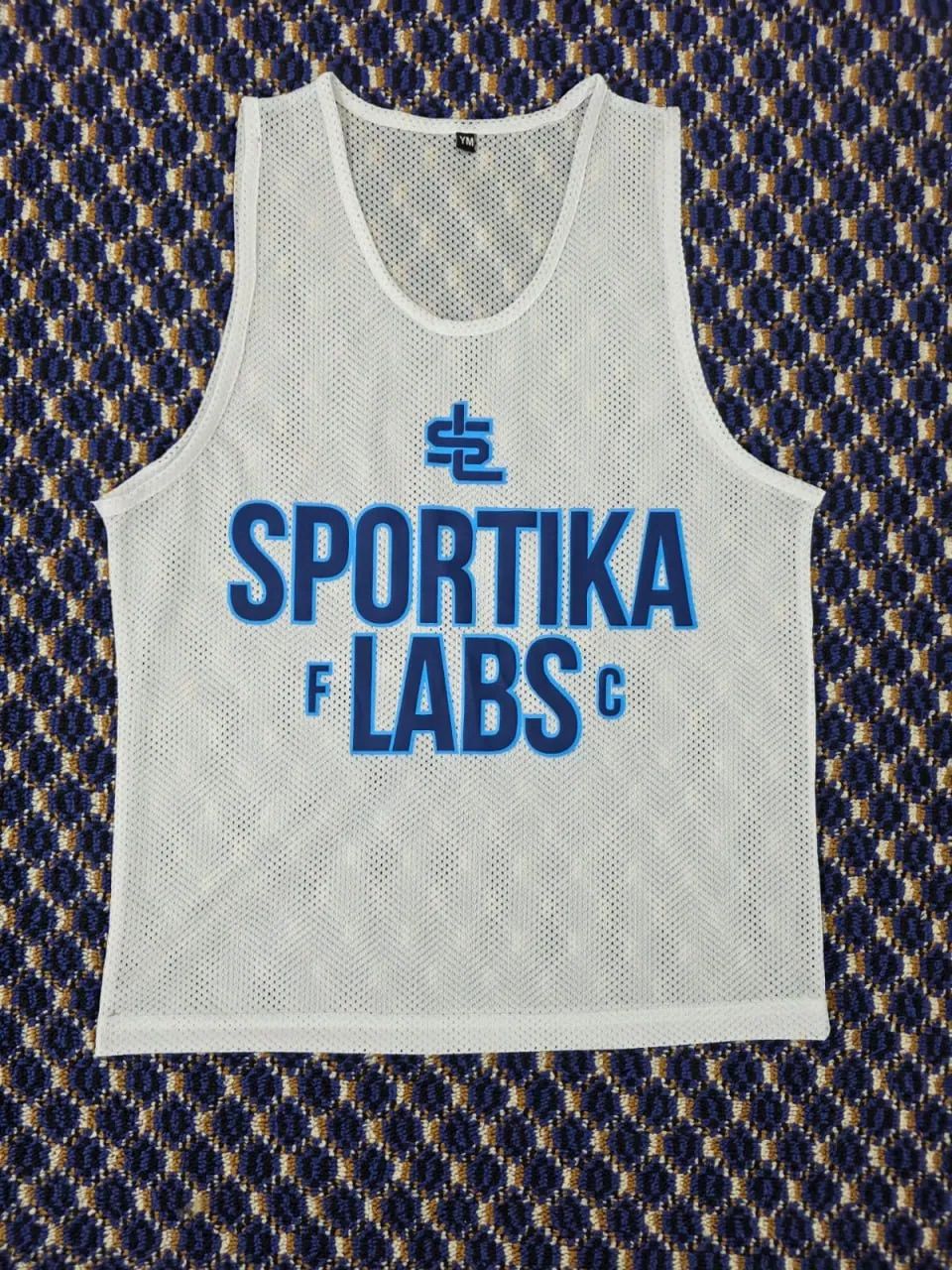
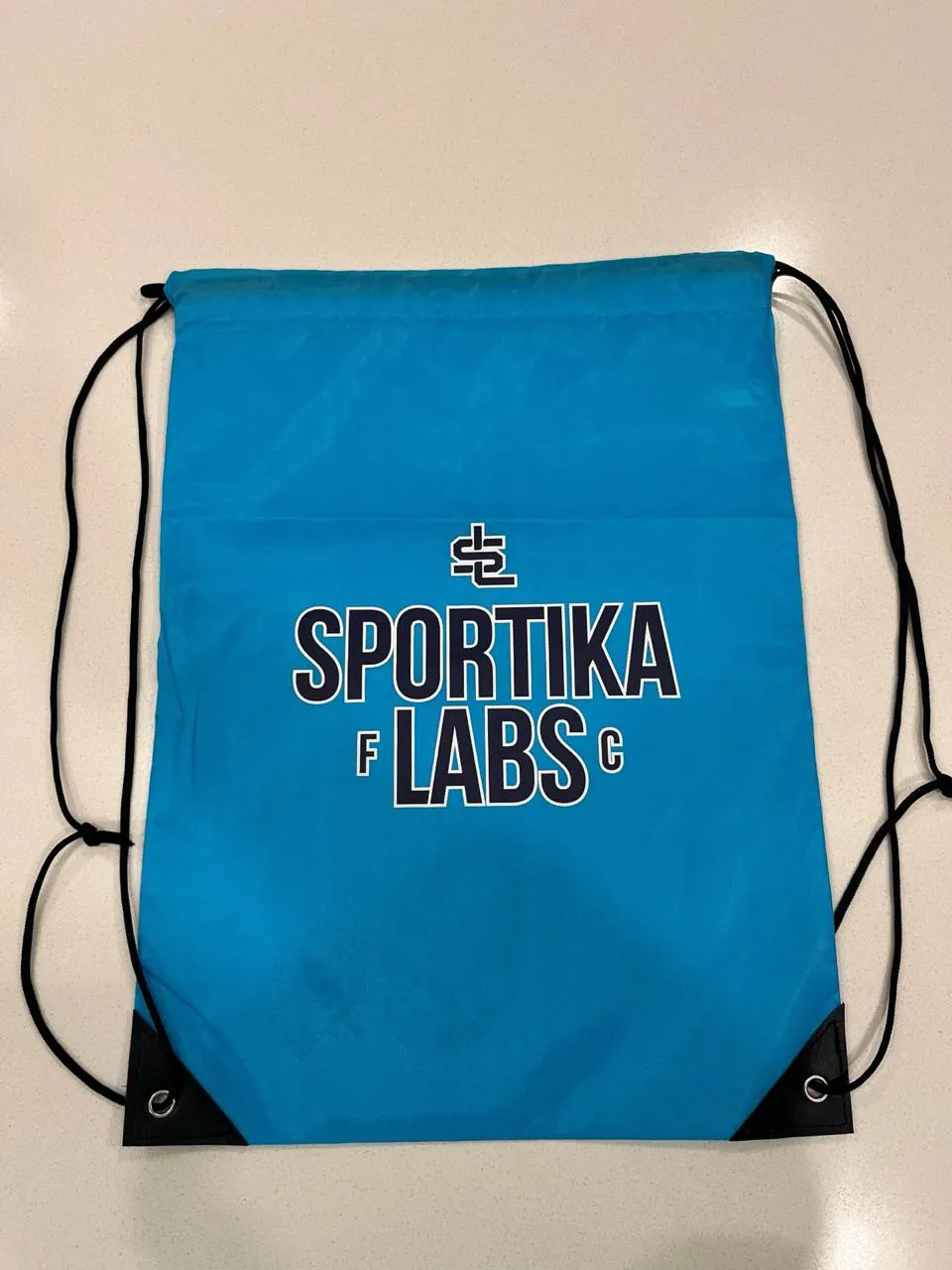
The piece of inventory that does the most work is something smaller than a jersey. Every kid who walks onto a trial session puts on a Sportika Labs training bib (branded, like a real footballer) and leaves with a medal. For most preschoolers, it’s the first medal they’ve ever owned, and they wear it home, through dinner, sometimes to bed.
It’s the smallest piece of inventory in the welcome pack, and the one that converts a curious parent into a paying one before they’ve reached the parking lot.
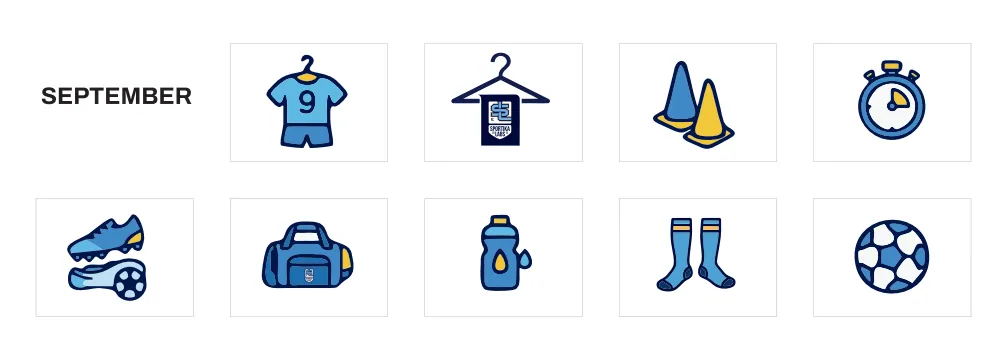
There’s also a Panini-style sticker journal that runs the entire season: a new layout each month, milestones with their own pages, stickers earned at training. The stickers are the best currency Sportika Labs has discovered for getting a kid to want to come back next week and complete the collection. The journals themselves are produced like proper book editions, with separate series for different age groups across multiple years.
The Numbers Conversation
A common worry from prospective partners is the financial model. What does the P&L actually look like? When do I break even? How much do I charge? The honest answer is that those numbers depend on the city.
The platform comes with a financial model template, and the Business Tracker fills it in alongside the partner: venue rental rates, coach compensation, marketing spend, expected lead volume. The model back-solves the membership price that makes the unit economics work.
For people who want a sense of the model before a conversation, Sportika Labs publishes a light interactive calculator that gives a directional read in a few minutes. The full version, the one a partner uses to plan a launch, gets built during the consultation with real numbers. There’s no cost and no commitment. The point is to let a prospective partner run the math before deciding anything.
The Light Switch
About forty-five days after signing, the trial sessions start running. The pipeline is full, the SMS sequences are firing, the website is live, the coaches have finished onboarding, and the kit has arrived.
A family shows up to a first trial. The kid puts on a bib, walks onto a field next to other kids putting on bibs. After the session, a coach hands him a medal, and he runs to his mom and doesn’t take it off.
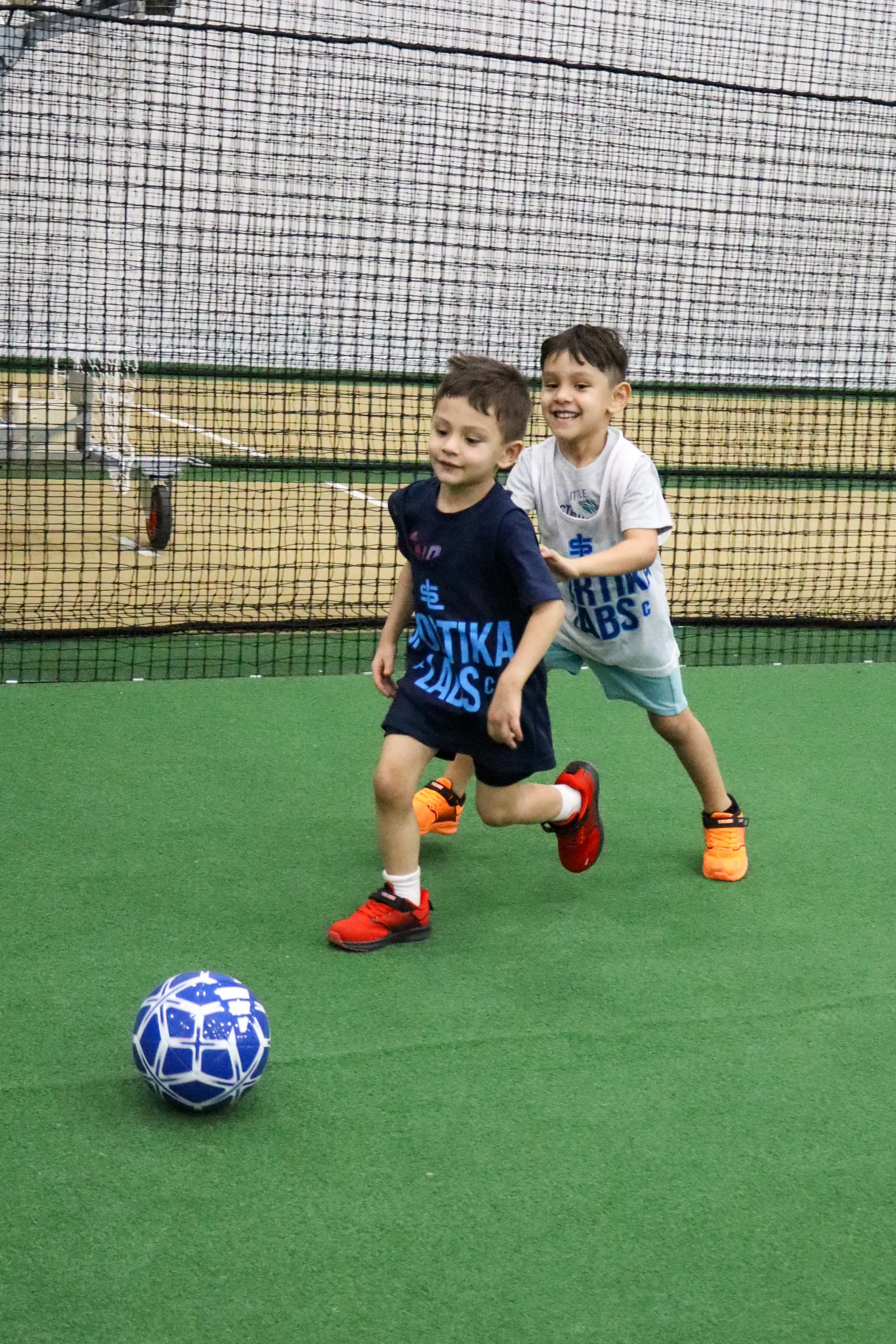

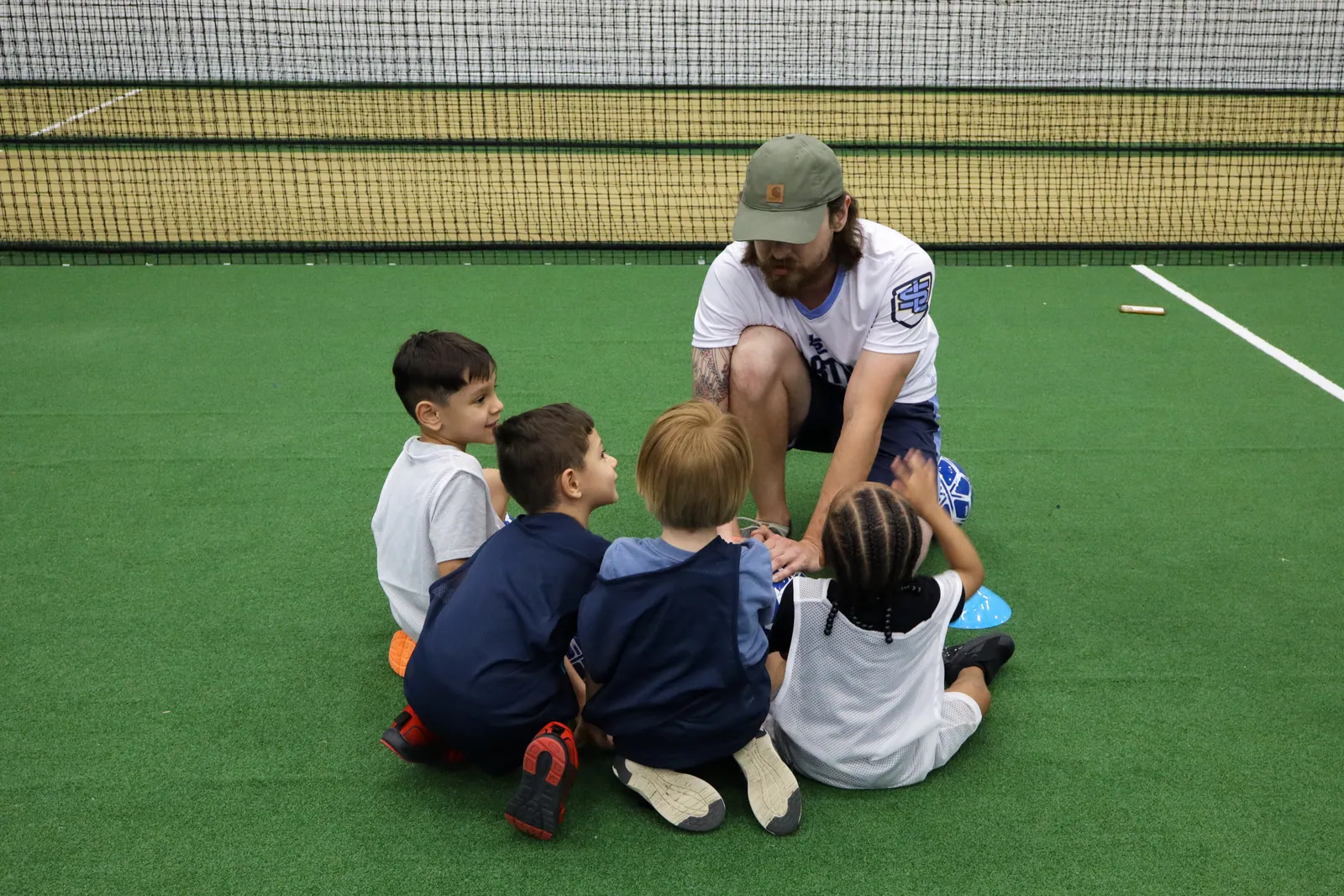
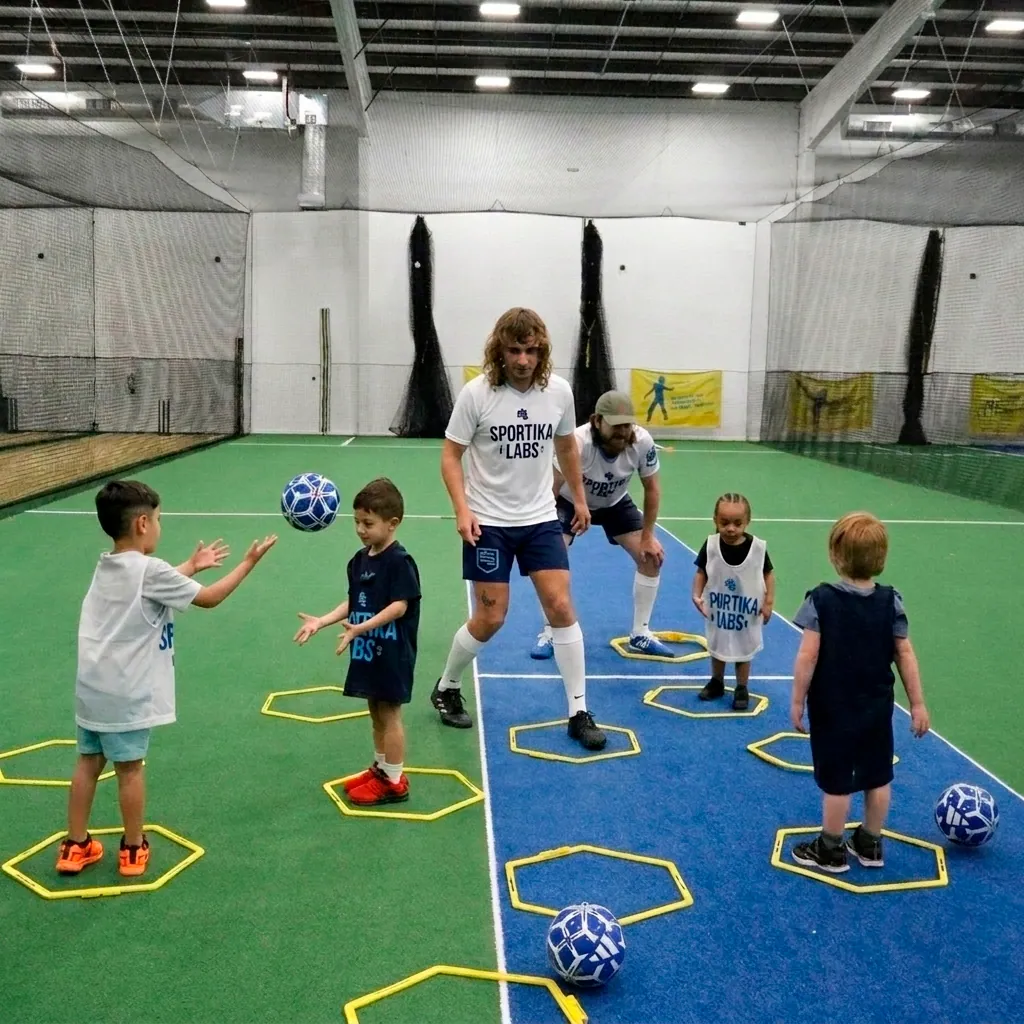
That’s how this becomes a youth soccer club instead of a soft launch.
And those trial sessions start turning into paid memberships. The payment infrastructure connects fast, with legal documents and enrollment terms preloaded, so the first family that enrolls can pay on the spot. Partners also run on the network’s processing rate, the kind a solo operator can’t get on their own, and that rate goes down as the network grows.
A few weeks into the Austin launch, the back end looked like this:
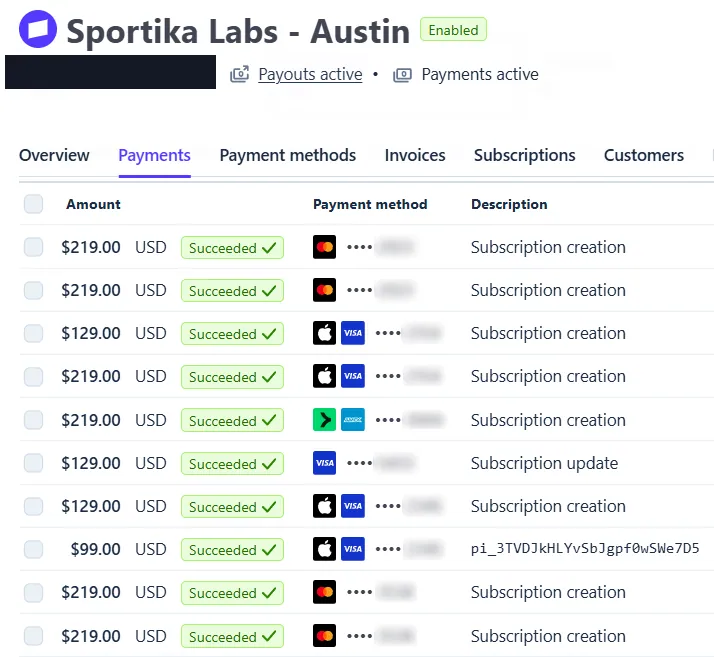
The $219 line is two trainings a week. $129 is one. $99 is the same-day-trial registration Tagir asked us to ship. Each row is a family that started somewhere (a community fair, a paid social ad, the Austin landing page), took a trial, and decided to come back.
Tagir didn’t do this alone. His wife was part of it from the start: she helped research neighborhoods, worked through logistics with him, weighed in on every decision. They became a team. For their family, this is the first business they’ve built together.
About forty-five days is when the operator’s job changes shape. The setup work gives way to growth work: lead flow continues, trials get booked, memberships come in, coaches find their rhythm. The platform handles the parts that don’t need a human, so Tagir gets to spend time at the field.
What’s ahead is already in the platform: internal tournaments between the first groups, FIFA-style player tracking through video-based assessment, and, as the academy grows, exposure to scouts who can watch the top players develop.
Could This Be Your City?
What happened in Austin wasn’t magic. It was a sequence: venue search, coach hiring, marketing setup, funnel automation, branded experience, all run by an operator who follows the playbook on a platform that handles what platforms should handle.
The methodology, the technology, the welcome pack, the ad campaigns, the legal templates, the curriculum, the player tracking, the parent communication: all of it shows up in the platform on day one. The operator brings the local knowledge, the energy, and the relationships. Sportika Labs brings the system that turns those into a real business.
If you’ve been thinking about something like this for your city, the conversation is the next step.
Book a free 30-minute call. We’ll show you the platform live, walk through what a launch in your city would actually look like, and give you a straight answer on whether this is the right fit. If it isn’t, we’ll tell you. If it is, you’ll see how the next forty-five days or so could look in your market.
What you get with a Sportika Labs license | Sportika Labs vs going solo | Investment & revenue model | Insurance, licenses & legal | Frequently asked questions